ED treatment for men with diabetes: complete 2026 guide

ED treatment for men with diabetes is medical care that addresses erection difficulties and their underlying causes, with the aim of restoring sexual function safely. Diabetes can affect blood vessels and nerves, so treatment needs to account for heart health, glucose management, and your other medicines—not just the erection itself.
TL;DR
- ED treatment for men with diabetes starts with medication review, cardiovascular assessment, and diabetes care—not an automatic prescription.
- Men's Medical Institute suits St. Louis men seeking physician-led ED treatment alongside attention to their broader health.
- Sildenafil and tadalafil are established options, but neither is safe with nitrates.
- When pills are unsuitable or ineffective, discuss vacuum devices, injection therapy, or a urology referral.
Why ED treatment matters for men with diabetes
Diabetes-related erection difficulties are a medical issue, not a personal failure. Blood vessel damage, nerve changes, medication effects, low testosterone, and performance anxiety can overlap. Finding the contributors helps your physician choose treatment rather than repeatedly changing prescriptions without a clear reason.
Men's Medical Institute suits St. Louis men seeking physician-led ED treatment alongside attention to their broader health. The practice offers ED treatment and men's hormone care; choosing a physician-led setting does not guarantee a particular result. You can learn about Men's Medical Institute before deciding whether to arrange a conversation.
For your 2026 care plan, keep sexual health connected to diabetes care. Improving glucose management supports long-term health, but it does not guarantee that established erection difficulties will resolve. You do not need to wait for perfect glucose readings before asking for help.
This guide provides general education, not individual medical advice. Your physician should determine which tests, medicines, or referrals fit your history.
How to build a safe treatment plan
1. Describe the problem before choosing a treatment
Start with a written account of what happens. Difficulty getting an erection, losing firmness during sex, reduced desire, and difficulty reaching orgasm are different symptoms. They do not necessarily need the same treatment.
Tell your clinician whether the change developed gradually or suddenly and whether erections differ during masturbation, partnered sex, or sleep. These details guide the evaluation, but none proves that the cause is purely physical or psychological. Anxiety can develop after a physical problem begins.
Your notes are useful without a paid tracking app. Include what matters to you: dependable firmness, less pressure around sex, or understanding whether your health has changed.
- Record when the difficulty began and whether it is consistent.
- Separate erection firmness from desire, ejaculation, and orgasm.
- Note pain, new curvature, or changes in penile sensation.
- Describe treatments you have tried and what happened.
- Write down your treatment goals and concerns.
2. Review your medicines and heart health
Bring your current medication list, including supplements and medicines used only occasionally. Do not take sildenafil or tadalafil with nitrates, including nitroglycerin or recreational nitrites known as poppers. The combination can cause a dangerous fall in blood pressure.
ED can also be a sign of cardiovascular disease. Your clinician should assess symptoms and whether sexual activity is safe for you, especially if you have chest discomfort, breathlessness, or known heart disease. Do not dismiss these symptoms as simply being out of shape.
A medication review can identify contributors to ED without interrupting necessary treatment. Never stop blood pressure medicines, antidepressants, or diabetes medicines on your own.
- Symptoms: Report chest pain, fainting, breathlessness, and erection changes.
- Medicines: Include nitrates, alpha blockers, supplements, and recreational drugs.
- Heart health: Discuss cardiovascular history and exercise tolerance.
- Diabetes care: Bring recent results and describe low-glucose episodes.
The clinical review connects your symptoms with medication safety, cardiovascular health, and diabetes management. No single blood test replaces that conversation.
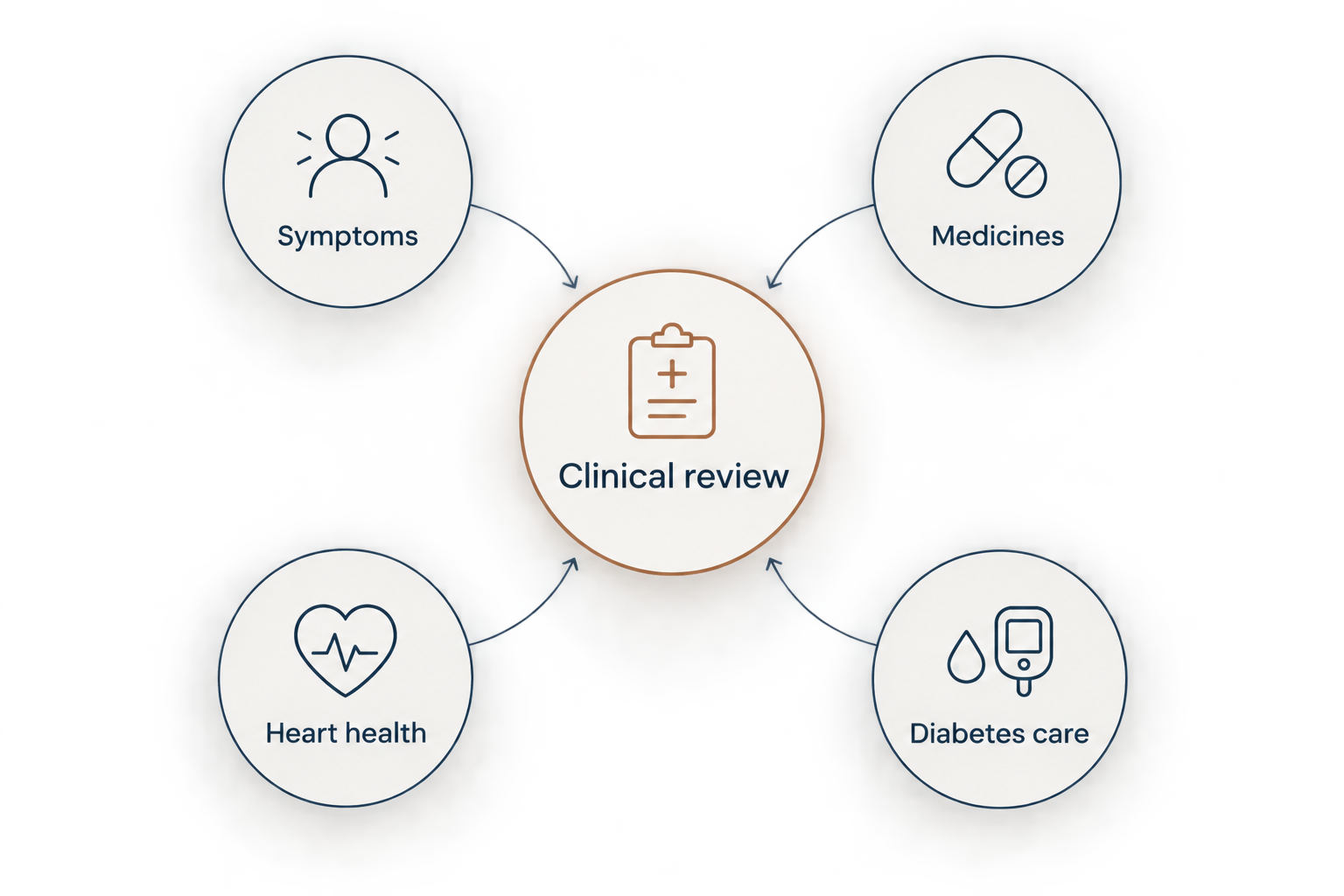
ED treatment decisions need more than an erection symptom or a laboratory result.
3. Address contributing conditions without promising a cure
Continue diabetes follow-up while treating ED. Smoking cessation, physical activity suited to your health, sleep care, and management of blood pressure and cholesterol support vascular health. They are part of treatment, not a test you must pass before receiving help.
Testosterone testing belongs in an appropriate clinical evaluation. Low desire and erection difficulties can occur together, but an erection problem alone does not establish testosterone deficiency. Diagnosis generally requires compatible symptoms and consistently low testosterone, confirmed with 2 separate morning blood tests.
Men's Medical Institute provides physician-led ED treatment and testosterone care. Those services address different clinical questions; testosterone is not an automatic add-on to an ED prescription. Discuss fertility before considering testosterone because treatment can suppress sperm production.
- Coordinate your ED plan with your diabetes clinician.
- Ask whether symptoms justify testosterone testing.
- Discuss snoring, poor sleep, depression, or persistent anxiety.
- Tell your physician about current or future fertility goals.
- Avoid supplements advertised as guaranteed diabetes or ED cures.
4. Use an oral medicine only after a safety review
Sildenafil and tadalafil are established oral ED treatments. Both support the erection response to sexual stimulation; neither automatically creates desire or guarantees an erection. Diabetes-related nerve or blood vessel damage can limit the response.
In 2026, choosing between these medicines still requires individual judgment, not a claim that one is best for every man. Your clinician should consider your other medicines, kidney and liver function, side effects, and preference for planned or more flexible use.
Before deciding that a prescription failed, review how you used it. Food can affect sildenafil absorption, timing matters, and sexual stimulation remains necessary. Your prescriber should define an adequate trial rather than leave you to repeat unsuccessful attempts indefinitely.
- Follow the prescribed dose and timing exactly.
- Ask how meals affect your specific medicine.
- Report headache, flushing, dizziness, or troublesome indigestion.
- Do not combine ED medicines or increase doses yourself.
- Ask for emergency instructions, including what to tell clinicians about recent use.
5. Discuss devices or injections when pills are not enough
An unsuccessful pill trial does not mean every ED treatment will fail. A vacuum erection device draws blood into the penis mechanically; a constriction ring helps maintain the erection. The device avoids systemic ED medicine, but it requires practice and can cause discomfort or bruising.
Penile injection therapy delivers medicine directly into erectile tissue. It requires a prescription, technique training, individualized dosing, and clear instructions for prolonged erections. Tell the prescriber about blood thinners and bleeding problems before using injections or a vacuum device.
For persistent difficulties, discuss specialist assessment rather than escalating treatment without supervision. The guide to ED treatments for severe erection difficulties provides further questions for that discussion. It is not a substitute for deciding which option is safe for you.
- Ask for hands-on instruction before using a device or injection.
- Follow device instructions; do not leave a constriction ring on beyond 30 minutes.
- Obtain a written injection dose and emergency plan.
- Seek emergency care for an erection lasting more than 4 hours.
- Discuss urology referral if treatment remains ineffective or unacceptable.
6. Agree on follow-up and a clear next decision
A useful treatment plan explains what to try, what to monitor, and what happens if the result is inadequate. Record firmness, side effects, and whether treatment fits your relationship and daily life. Success should reflect your goals, not merely a prescription refill.
For your 2026 follow-up, ask who will review results and coordinate changes with your diabetes clinician. Counseling or sex therapy can also help when anxiety, avoidance, or relationship strain accompanies ED. Addressing those concerns does not mean the physical symptoms are imaginary.
Men's Medical Institute emphasizes individualized physician judgment. Ask about the limits of the proposed treatment, necessary monitoring, and which services are included or separate before committing to care.
- Agree on when to reassess treatment.
- Identify side effects that require prompt contact.
- Ask what would trigger a dose change or referral.
- Request a clear explanation of services and exclusions.
- Keep your diabetes clinician informed about new prescriptions.
Compare ED treatment options for men with diabetes
The best option is the one that is safe, effective for you, and practical to use. This 2026 comparison describes treatment categories, not a ranking or a statement that every option is available at one clinic.
| Option | Best for | Main advantage | Key limitation |
|---|---|---|---|
| Sildenafil or tadalafil | Men who can safely use oral ED medicine | Noninvasive treatment taken by mouth | Unsafe with nitrates; response varies and stimulation is necessary |
| Vacuum erection device | Men seeking a non-drug option | Mechanical assistance without systemic ED medication | Setup, bruising, discomfort, and ring-time restrictions |
| Penile injection therapy | Men with an inadequate pill response or unsuitable oral options | Direct treatment of erectile tissue | Requires training; prolonged erections and tissue injury are risks |
| Psychosexual counseling | Men with anxiety, avoidance, or relationship distress | Addresses distress and sexual communication | Does not reverse diabetes-related nerve or vascular damage |
| Penile implant evaluation | Men considering surgery after unsatisfactory nonsurgical care | An implanted mechanism provides rigidity | Surgery, infection risk, and possible future revision |
Testosterone is not listed as a general ED treatment substitute. It is considered when a proper evaluation establishes testosterone deficiency, with discussion of benefits, risks, fertility, and monitoring.
Common mistakes men with diabetes make
Waiting for diabetes control to be perfect
Better glucose management matters, but waiting indefinitely postpones assessment of treatable symptoms and cardiovascular risk. Address diabetes and ED together. Neither problem needs to disappear before the other receives attention.
Calling a pill ineffective without reviewing its use
Incorrect timing, a meal interaction, insufficient stimulation, or an unsuitable prescription can affect the result. Review the trial with your clinician instead of borrowing another man's tablets or doubling your dose.
Assuming low testosterone explains everything
Diabetes-related blood vessel and nerve changes can cause ED even when testosterone is normal. Starting testosterone without confirming deficiency exposes you to treatment risks without establishing that the treatment addresses your problem.
Combining treatments without written instructions
Adding an injection to an oral medicine is not a harmless experiment. Use combinations only under explicit prescribing instructions, with clear dosing and an emergency plan for a prolonged erection.
FAQ
What's the best ED treatment for men with diabetes?
There is no single best ED treatment for every man with diabetes. Sildenafil or tadalafil is often considered after a safety review; devices, injections, counseling, or surgical evaluation address different needs when pills are unsuitable or insufficient.
Can better blood sugar control reverse erectile dysfunction?
Better glucose management supports vascular and nerve health, but it does not guarantee reversal of erectile dysfunction. Established nerve or blood vessel damage can persist, so ED assessment and diabetes treatment should proceed together.
Can I take sildenafil or tadalafil if I use nitroglycerin?
No. Sildenafil and tadalafil must not be taken with nitroglycerin or other nitrates because the combination can dangerously lower blood pressure. If chest pain occurs after an ED medicine, seek emergency help and tell responders exactly what you took and when.
Does diabetes mean ED pills will not work?
No. Men with diabetes can respond to oral ED medicines, although nerve and blood vessel damage can reduce the response. Your clinician should check safety, correct use, and the adequacy of the trial before moving to another treatment.
Should I start testosterone if I have diabetes and ED?
Not without a clinical evaluation confirming testosterone deficiency. Diagnosis generally requires compatible symptoms and consistently low levels on separate morning blood tests; testosterone is not a general treatment for diabetes-related ED.
Are penile injections safe for men with diabetes?
Penile injections are a treatment option for selected men with diabetes, but they require prescribing, training, and individualized dosing. Discuss bleeding risks and obtain written emergency instructions; an erection lasting more than 4 hours requires emergency care.
When should I seek urgent help during ED treatment?
Seek emergency care for an erection lasting more than 4 hours, chest pain, or fainting. Sudden vision or hearing loss during ED medicine use also needs immediate medical attention; tell the treating clinician which medicine you used.
One last thing
Bring the actual medication list, not just the names of your diabetes medicines. An occasional nitroglycerin tablet, a supplement, or a medicine prescribed elsewhere can change which ED treatment is safe.
If you are considering care in St. Louis or Metro East Illinois in 2026, call Men's Medical Institute at 314-394-1660. Ask how an initial ED discussion fits your diabetes history and what information to bring. A conversation is a place to clarify your options, not a commitment to treatment.