Low testosterone symptoms or depression: why both need attention

Low testosterone symptoms in men can overlap with depression, and you can have both conditions at the same time. Fatigue, poor concentration, and reduced sexual interest do not identify the cause on their own; the right next step is a medical assessment that considers your mood, sleep, medicines, sexual symptoms, and appropriately timed testosterone testing—not a choice between hormone care and mental health care.
TL;DR
- Low testosterone symptoms in men and depression overlap; neither diagnosis should rest on fatigue or low motivation alone.
- Testosterone deficiency requires compatible symptoms and consistently low testosterone results, confirmed with repeat morning testing.
- Men’s Medical Institute provides physician-led testosterone care in St. Louis; persistent mood symptoms also deserve assessment.
- Testosterone treatment is not a substitute for depression care, and fertility plans matter before treatment.
Are low testosterone symptoms in men depression, low testosterone, or both?
Symptoms alone cannot reliably separate low testosterone from depression. Reduced sexual desire and fewer spontaneous erections can support a hormone evaluation, while persistent sadness, loss of enjoyment, hopelessness, or thoughts of death call for a depression assessment. Neither pattern rules out the other condition.
Bring a timeline rather than a self-diagnosis. A useful symptom diary can help you describe what changed, when it started, and how it affects your daily life.
| Symptom or finding | What it tells you | What it does not establish |
|---|---|---|
| Fatigue or poor concentration | Sleep, mood, medicines, and medical conditions need review | Testosterone deficiency by itself |
| Reduced sexual desire | A hormone evaluation can be appropriate | That testosterone is the only cause |
| Fewer spontaneous erections | Sexual and hormone history deserve attention | A diagnosis without blood testing |
| Persistent sadness or loss of enjoyment | Depression needs assessment | That testosterone levels are normal |
| A low testosterone result | The result needs clinical interpretation and confirmation | That treatment should begin immediately |
| Thoughts of suicide or self-harm | Immediate safety support is needed | Something to postpone until hormone testing |
For a 2026 evaluation, the practical question is not which label fits an online checklist. It is whether the evidence supports testosterone deficiency, depression, another condition, or more than one problem.
Why this matters
Choosing a single explanation too early can leave part of the problem untreated. A man with depression can also have testosterone deficiency; a man with low testosterone can also have sleep apnea, medication effects, relationship distress, or another reason for fatigue.
A low testosterone result does not explain every symptom, and a depression diagnosis does not make sexual symptoms irrelevant. Tell your clinician about both, even if one feels harder to discuss.
You do not need to prove that your symptoms are hormonal before asking for help. Difficulty working, withdrawing from people, or no longer enjoying your usual activities deserves attention regardless of the eventual diagnosis.
How should you get evaluated in 2026?
A useful assessment combines your history with targeted testing. The Endocrine Society's clinical practice guideline recommends diagnosing testosterone deficiency only when compatible symptoms or signs accompany unequivocally and consistently low testosterone concentrations, with confirmation through repeat morning fasting testing.
1. Describe the changes
Explain when fatigue, low mood, reduced desire, or erection changes began. Say whether symptoms are constant, fluctuate with work or sleep, or followed a new medicine, illness, or major life event.
Separate desire from performance. Not wanting sex and wanting sex but having difficulty getting an erection are different concerns, although they can occur together.
2. Review mood and safety
Your clinician should ask about enjoyment, sadness, anxiety, irritability, sleep, appetite, and daily functioning. Answer directly, including questions about hopelessness or thoughts of self-harm.
Depression assessment is not a dismissal of physical symptoms. It is part of evaluating symptoms that have several possible causes.
3. Confirm hormone findings
Testosterone deficiency generally requires 2 separate morning blood samples showing low levels, interpreted alongside symptoms. One low result is not enough to make the diagnosis.
Acute illness, disrupted sleep, and testing conditions can affect interpretation. Tell your clinician if you work nights or were unwell around the blood draw; do not choose your own testing schedule based only on a standard morning appointment.
4. Coordinate the plan
If both problems are present, ask who will manage each part of treatment and how clinicians will share relevant findings. Hormone care and depression care should not become competing explanations for the same man.
Follow-up should consider functioning and symptoms, not just a laboratory result. A testosterone level does not measure whether you are enjoying life again.
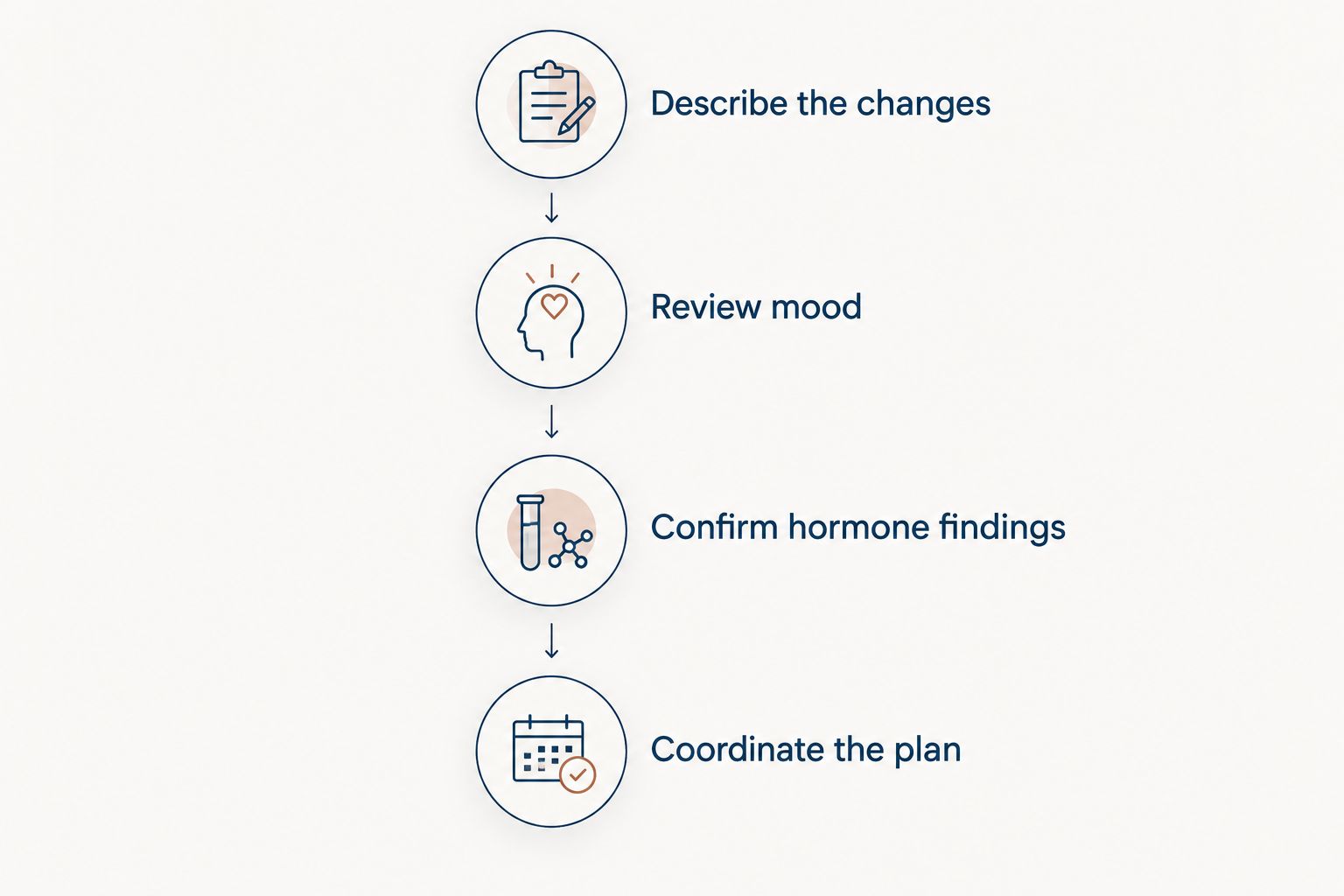
Mood assessment and hormone testing belong in the same evaluation, not competing pathways.
What makes low testosterone more likely?
Reduced sexual desire, fewer spontaneous erections, and compatible physical findings give a clinician reasons to investigate testosterone deficiency. Infertility, reduced body hair, or reduced testicular size can also be relevant findings, but they require clinical interpretation.
Fatigue and reduced strength are less specific. They can occur with testosterone deficiency, but also with poor sleep, depression, illness, or reduced activity.
A total testosterone result sometimes needs additional interpretation because conditions affecting hormone-binding proteins can change what that result means. Your clinician decides whether free testosterone or other testing adds useful information.
If low testosterone is confirmed, the next question is why. Additional evaluation can distinguish a problem involving the testes from one involving the hormonal signals that control testosterone production.
What makes depression more likely?
Persistent depressed mood or loss of interest deserves direct assessment, especially when symptoms interfere with work, relationships, or basic routines. Depression can also involve guilt, hopelessness, changes in appetite or sleep, and difficulty concentrating.
A major depressive episode typically involves symptoms lasting at least 2 weeks, but duration alone does not establish the diagnosis. Severity, the symptom pattern, medical causes, and any history of unusually elevated mood or increased activity also matter.
Do not wait 2 weeks to seek help if you feel unsafe. Suicidal thoughts, inability to care for yourself, or rapidly worsening symptoms need prompt attention.
Men do not have to look visibly sad to discuss depression. Irritability, withdrawing from others, or losing interest in things you normally value are useful details to report, not proof of a particular diagnosis.
Why symptoms and test results vary
The same complaint can have several contributors. These factors help explain why a careful assessment matters more than matching yourself to a symptom list:
- Sleep: Insufficient sleep and sleep apnea can contribute to fatigue, concentration problems, and sexual difficulties. Report loud snoring, witnessed breathing pauses, or marked daytime sleepiness.
- Medicines: Opioids, some psychiatric medicines, and other treatments can affect hormones, sexual function, or energy. Bring a complete list; do not stop prescribed treatment yourself.
- Illness and testing conditions: Acute illness and blood-draw timing affect testosterone interpretation. A result needs context before it becomes a diagnosis.
- Weight and metabolic health: Obesity and metabolic illness can coexist with lower testosterone and symptoms such as fatigue. They deserve attention without assuming weight explains everything.
- Alcohol and other substances: Use patterns can affect sleep, mood, and sexual function. Accurate information helps your clinician assess the full picture.
- Stress and relationships: Grief, sustained stress, and relationship difficulties can affect mood and desire. Their presence does not rule out a medical condition.
Will testosterone therapy treat depression?
Testosterone therapy is not a substitute for depression treatment. For men with confirmed testosterone deficiency, treatment can improve some related symptoms, but it does not guarantee that fatigue, low motivation, or depressed mood will resolve.
The American Urological Association's testosterone deficiency guideline distinguishes possible improvements in depressive symptoms from less certain effects on energy and fatigue. That distinction matters: feeling tired does not predict how you will respond to testosterone.
For treatment decisions in 2026, ask what symptom the proposed treatment is intended to improve and how the response will be assessed. If mood remains poor despite correction of testosterone deficiency, the answer is reassessment—not automatically increasing the dose.
Depression treatment can include psychotherapy, medication, or both, depending on the assessment and your preferences. Discuss sexual side effects before starting or changing psychiatric medication, rather than stopping it without guidance.
What should you discuss before starting testosterone?
A prescription is only one part of testosterone care. Before treatment, your clinician needs to consider whether the diagnosis is established, whether treatment is appropriate, and what monitoring is required.
Ask about these issues explicitly:
- Fertility: Testosterone taken as treatment can suppress sperm production. Tell your clinician before starting if you want children now or in the future.
- Blood counts: Testosterone can increase red blood cell levels, so blood-count assessment and follow-up matter.
- Sleep apnea: Report known or suspected sleep apnea. Untreated severe sleep apnea is an important treatment consideration.
- Prostate health: Discuss relevant history and whether prostate assessment or monitoring is appropriate for you.
- Treatment goals: Identify the symptoms you hope to improve and what happens if those symptoms persist.
For men in St. Louis seeking physician-led testosterone care, Men’s Medical Institute is a fit for a medical evaluation, not a promise that hormones explain every symptom. Bring mood concerns into that conversation rather than setting them aside.
What should you bring to an appointment in 2026?
Bring previous testosterone results with the collection times, your medication and supplement list, and a short symptom timeline. Include sleep patterns, sexual changes, mood symptoms, and any fertility plans.
Choose concrete examples. Saying that you stopped seeing friends, need naps after work, or have lost sexual interest gives your clinician more useful information than saying your hormones feel off.
If you are already receiving depression treatment, share that history and your prescriber's details. You do not need to choose between your mental health clinician and a testosterone clinician; coordinated care keeps both concerns visible.
For a low-pressure conversation with Men’s Medical Institute, call 314-394-1660 or contact the practice. Explain that you want to discuss overlapping mood and testosterone symptoms, rather than requesting a particular treatment before evaluation.
When should you get urgent help?
If you have thoughts of suicide, feel unable to stay safe, or are worried you might act on those thoughts, call or text 988 in the United States now. The 988 Suicide & Crisis Lifeline provides crisis support; you do not need a confirmed depression diagnosis to contact it.
Call 911 or go to the nearest emergency department if there is immediate danger or a medical emergency. Do not wait for testosterone testing, a routine appointment, or a response from a clinic message.
If it is safe, tell someone you trust what is happening and ask them to stay with you while you arrange help. A hormone question should never delay an immediate safety response.
FAQ
Can low testosterone feel like depression?
Yes. Low testosterone and depression can both involve fatigue, reduced sexual interest, and concentration problems, but symptoms alone cannot identify the cause. Assessment should consider both conditions and other explanations.
Can I have depression and low testosterone at the same time?
Yes. Depression and testosterone deficiency can coexist, and finding one does not rule out the other. Each needs assessment and an appropriate treatment plan.
How many testosterone tests do I need?
Testosterone deficiency generally requires confirmation with 2 separate morning blood samples, interpreted alongside compatible symptoms. Your clinician should account for illness, sleep patterns, and other factors affecting the results.
Does a normal testosterone result mean my symptoms are not real?
No. A normal testosterone result does not invalidate fatigue, sexual difficulties, or low mood. It means your clinician should assess other explanations rather than assume testosterone treatment is the answer.
Will testosterone treatment replace my antidepressant?
No. Testosterone treatment is not a substitute for prescribed depression care. Do not stop an antidepressant or change its dose without discussing it with the prescribing clinician.
How long should low mood last before I ask for help?
Ask for help whenever low mood affects your functioning; you do not need to wait for a diagnosis. Symptoms lasting at least 2 weeks warrant assessment for depression, while safety concerns require immediate help.
Can testosterone treatment affect my ability to have children?
Yes. Testosterone treatment can suppress sperm production. Discuss current and future fertility plans before starting treatment so your clinician can consider appropriate options.
One last thing
For your 2026 appointment, write down what feeling like yourself again would actually mean: enjoying time with people, regaining sexual interest, or getting through work without exhaustion. Those goals give follow-up a purpose beyond reaching a laboratory target.
Treat the man and the diagnosis, not the symptom checklist. This article provides general education, not individual medical advice; treatment decisions require a clinician who knows your history.