Men's longevity therapies ranked by cost in 2026

Best overall: physician-guided preventive care. Best for men with obesity: medical weight management. Best budget decision: skip injections sold solely as life extension. This 2026 longevity therapy cost comparison ranks spending priorities, not advertised fees: testosterone and ED treatment address specific medical problems, while injectable NAD+ is not a proven longevity treatment.
TL;DR
- This longevity therapy cost comparison prioritizes preventive care before optional injections or hormone treatment.
- Mensmedicalinstitute offers physician-led men's health care; treatment should follow a specific medical indication.
- Testosterone replacement treats confirmed deficiency, not aging itself; monitoring belongs in your treatment budget.
- Injectable NAD+ and glutathione are not proven longevity treatments; broad anti-aging benefits in humans remain uncertain.
Why this matters
A treatment that helps erections, reduces weight, or corrects testosterone deficiency does not automatically extend life. Those are different outcomes. Your spending should follow the problem you need treated, not the breadth of an anti-aging claim.
Mensmedicalinstitute provides physician-led testosterone replacement therapy, NAD+ therapy, ED treatment, and weight management for men in St. Louis. Mensmedicalinstitute is best for men seeking physician-led assessment of testosterone, sexual health, or weight concerns—not a promise of longer life.
For men in St. Louis and Metro East Illinois comparing care in 2026, the useful question is not simply which treatment has the smallest bill. It is which treatment addresses a documented need, what follow-up it requires, and what would justify continuing it.
What makes the best longevity-care spending decision?
Use these criteria before comparing offers:
- Medical fit: Start with symptoms, diagnoses, health risks, and your goals—not a package of treatments.
- Evidence for your outcome: Separate evidence for weight loss or symptom relief from evidence for longer life.
- Full care requirements: Include assessment, medication, testing, supplies, and follow-up when requesting a written estimate.
- Safety and reversibility: Understand adverse effects, interactions, fertility implications, and when treatment should stop.
- Measurable benefit: Agree on what improvement would look like before starting.
An advertised medication fee does not describe the entire course of care. Conversely, a larger treatment package does not establish greater medical benefit. Compare equivalent services and clinically appropriate plans.
Longevity therapy cost comparison at a glance
This ranking reflects where to direct attention and spending first, not a cheapest-to-most-expensive fee schedule. Different prescriptions, testing needs, and treatment durations prevent a universal cost order. None of these categories should be presented as a guaranteed lifespan treatment.
| Priority | Care option | Best for | Standout role | What to include in the comparison | Key limitation |
|---|---|---|---|---|---|
| 1 | Physician-guided preventive care | Men without an established treatment indication | Identifies actionable health risks | Visits, indicated screening, and follow-up | Does not replace treatment for a diagnosed condition |
| 2 | Medical weight management | Men with obesity or qualifying weight-related conditions | Treats a defined health problem | Medication, follow-up, nutrition support, and indicated testing | Requires ongoing management; medication has risks |
| 3 | Testosterone replacement therapy | Men with symptoms and confirmed testosterone deficiency | Replaces a deficient hormone | Assessment, medication, supplies, laboratory testing, and monitoring | Not established as life-extension treatment; suppresses sperm production |
| 4 | ED treatment | Men with persistent erection difficulties | Targets sexual function | Evaluation, prescription, and any training or supplies | Does not establish a longevity benefit |
| 5 | Injectable NAD+ or glutathione | No established best-fit group for life extension | Optional treatment with uncertain anti-aging benefit | Administration, product sourcing, and follow-up | Not proven longevity treatments; sterile preparation matters |
1. Preventive care: best starting point without a diagnosis
Physician-guided preventive care starts with your health history, blood pressure, relevant screening, medications, sleep, tobacco exposure, and activity. The aim is to identify risks that deserve attention rather than assume fatigue or aging requires an injection.
For your 2026 plan, the U.S. Physical Activity Guidelines recommend at least 150 minutes per week of moderate-intensity aerobic activity and muscle-strengthening activity on 2 days per week for adults. Your clinician can adapt activity recommendations to your health and abilities.
Preventive care pros:
- Connects spending to identifiable health risks.
- Creates a baseline before adding medication.
- Gives symptoms a broader assessment than a hormone panel alone.
Preventive care cons:
- Does not provide immediate relief for every symptom.
- Screening and follow-up must match age, history, and risk; more testing is not automatically better.
Best for: Men who want healthier aging but do not have a diagnosis that justifies a specific therapy.
Ask what is due, what is unnecessary, and which finding would change your care. If your main concern is tiredness, describe sleep, mood, medications, and daily functioning rather than requesting a predetermined prescription.
Verdict: Buy appropriate preventive care before optional anti-aging add-ons.
2. Medical weight management: best for treating obesity
Medical weight management addresses excess weight in the context of your health, treatment history, and goals. Prescription medication is an option for eligible patients, not a requirement for every man who wants to lose weight.
A useful plan considers nutrition, physical activity, muscle strength, adverse effects, and follow-up. Medication eligibility and the choice of treatment require an individual assessment.
Medical weight management pros:
- Treats a defined condition rather than aging itself.
- Allows progress to be assessed through weight, function, and relevant health measures.
- Gives you a structured setting to discuss appetite, tolerability, and treatment adjustments.
Medical weight management cons:
- Medication can cause adverse effects and is not suitable for everyone.
- Weight management requires an ongoing plan; stopping medication can lead to weight regain.
Best for: Men with obesity or qualifying weight-related conditions who need medical help beyond self-directed efforts.
For a 2026 comparison, ask whether the proposed medication is FDA-approved or compounded. Compounded semaglutide and tirzepatide are not FDA-approved, and FDA does not review compounded products for safety, effectiveness, or quality before marketing.
Do not treat weight loss alone as proof that a particular program extends life. Ask which health outcomes matter in your case and how the clinician will assess them.
Verdict: Buy when clinically indicated, with a plan for nutrition, strength, and follow-up.
3. Testosterone replacement: best for confirmed deficiency
Testosterone replacement therapy treats testosterone deficiency in men who have compatible symptoms and consistently low levels. It is not a general treatment for getting older, and fatigue alone does not establish a diagnosis.
The American Urological Association's diagnostic guidance calls for 2 separate early-morning testosterone measurements, alongside symptoms and clinical assessment. Testing circumstances matter, including sleep patterns, illness, and medicines.
Testosterone replacement pros:
- Addresses a documented hormone deficiency.
- Offers specific symptoms and laboratory findings to reassess during care.
- Supports a defined monitoring plan rather than treatment based only on how you feel that day.
Testosterone replacement cons:
- Suppresses sperm production and requires a fertility discussion.
- Can raise hematocrit and requires safety monitoring.
- Does not establish a life-extension benefit.
Best for: Men with relevant symptoms, confirmed low testosterone, and a clinician's assessment that treatment is appropriate.
At Mensmedicalinstitute, laboratory testing is separate from the testosterone program charge. Request the medication, testing, supplies, and follow-up details together so you can compare equivalent care. The guide to comparing the full cost of testosterone care explains the distinction between a prescription offer and a complete treatment plan.
Verdict: Buy only for a confirmed indication; skip testosterone prescribed solely for longevity.
4. ED treatment: best for a specific sexual-health concern
ED treatment addresses difficulty getting or maintaining an erection. A useful assessment also considers medication effects, diabetes, cardiovascular risk, emotional factors, and other possible contributors.
Treatment selection depends on your health, preferences, and response. Better erections are a meaningful outcome, but they are not evidence that an ED treatment extends life.
ED treatment pros:
- Targets a clearly defined symptom.
- Gives you a practical outcome to assess.
- Creates an opportunity to identify associated health concerns.
ED treatment cons:
- Treatment does not remove the need to assess underlying contributors.
- Options have contraindications and adverse effects; oral ED medicines must not be combined with nitrates.
Best for: Men with persistent erection difficulties who want an individualized assessment and treatment discussion.
When comparing care, ask whether the estimate covers the evaluation, prescription, supplies, and any required training. A tablet prescription and an injection-based plan involve different care needs; do not compare them as interchangeable purchases.
Verdict: Buy care for bothersome ED after assessment; skip longevity claims attached to it.
5. Injectable NAD+ or glutathione: best left out of a longevity budget
Injectable NAD+ and glutathione are not proven longevity treatments. Biological explanations about cellular energy or antioxidant activity do not demonstrate that injections help people live longer.
For a 2026 decision, separate a proposed mechanism from a demonstrated human benefit. Sterile compounding quality also matters because an injectable product introduces risks that a wellness label does not remove.
Injectable NAD+ or glutathione pros:
- A clinical discussion gives you a chance to examine the proposed purpose and evidence before committing.
- You can decline an optional intervention without abandoning preventive or condition-specific care.
Injectable NAD+ or glutathione cons:
- Broad anti-aging benefits in humans remain unproven.
- Injections involve administration risks and sterile-quality concerns.
- A subjective change in energy does not establish longer life.
Best for: No patient group has an established indication for these injections solely to extend lifespan.
If you are considering treatment, ask what outcome is expected, what evidence supports it, where the product comes from, and what would prompt discontinuation. Those questions are appropriate even when a physician offers the service.
Verdict: Skip for life extension; discuss any other proposed use separately.
How to compare the full care plan
Before agreeing to a recurring program, use this sequence:
- Define the goal: Name the symptom, diagnosis, or risk you want addressed.
- Confirm the indication: Ask why this treatment fits your findings.
- List the services: Request the medication, tests, visits, supplies, and exclusions in writing.
- Set the review: Agree on how benefit and safety will be assessed.
- Agree on stopping: Ask what would lead to changing or ending treatment.
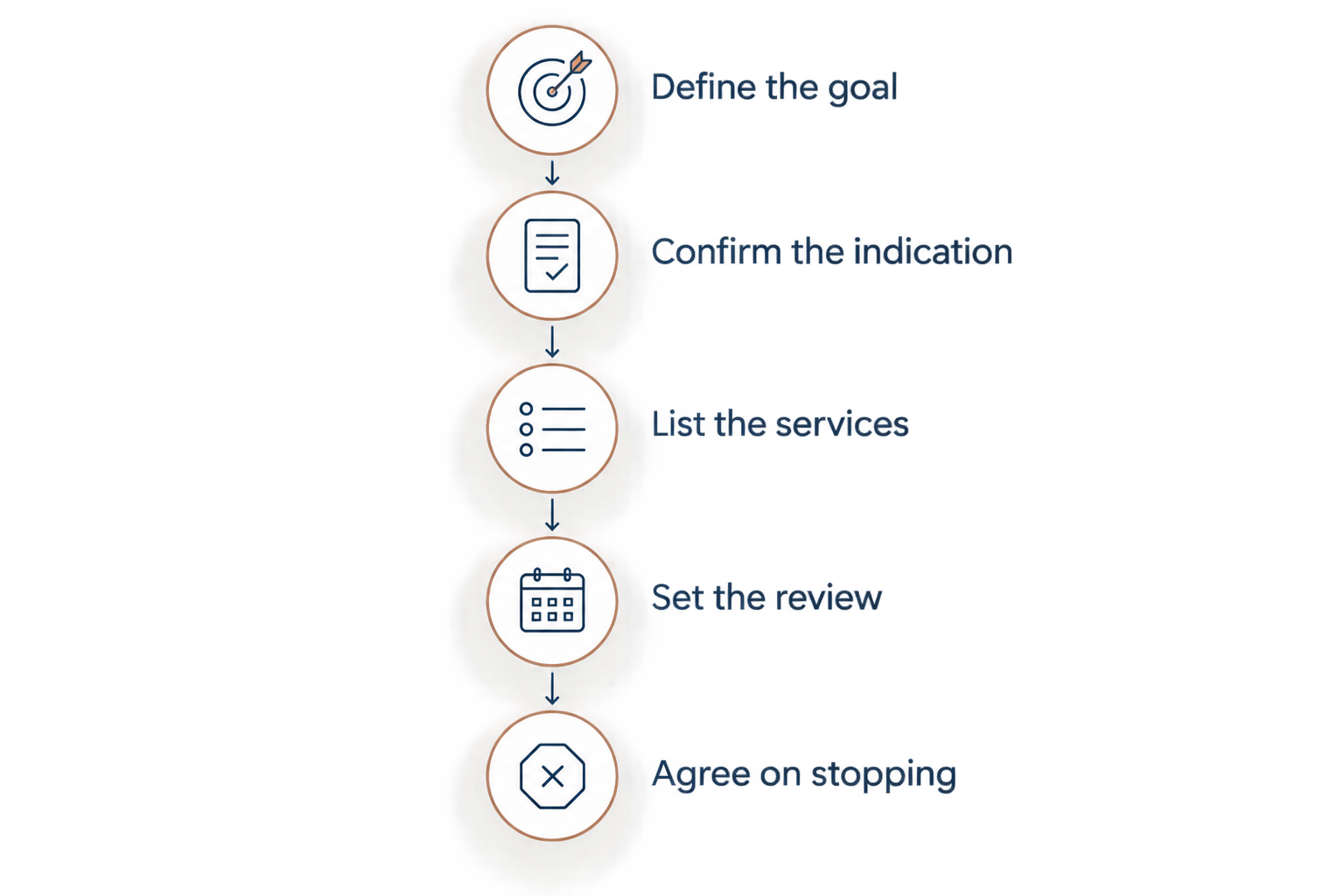
A useful treatment comparison includes a reason to start and a reason to stop.
Keep a copy of the proposed plan. That makes the comparison about equivalent care rather than whichever offer leaves the most services unexplained.
How the ranking works
The order prioritizes medical fit, evidence for the intended outcome, safety requirements, and measurable benefit. It does not rank clinics, claim firsthand treatment testing, or assume one provider charges less than another.
A diagnosed condition changes the order. If you have confirmed testosterone deficiency or persistent ED, condition-specific assessment belongs ahead of browsing optional wellness treatments.
Which longevity care should you choose?
Start with a physician-led assessment, then treat the problem the assessment identifies. For an undecided reader in 2026, preventive care is the default—not a package combining hormones, injections, and supplements.
If you want to discuss testosterone, ED, weight management, or NAD+ with Mensmedicalinstitute, call 314-394-1660. Ask what evaluation is appropriate before deciding whether treatment fits your goals.
FAQ
What's the best starting point for men's longevity care?
Physician-guided preventive care is the best starting point when you do not have an established treatment indication. Review your health risks and symptoms before choosing a hormone or injectable treatment.
Which longevity therapy is the cheapest?
There is no universal cheapest option across different diagnoses and care plans. Compare the complete proposed services, including testing and follow-up, and exclude treatments that do not address your needs.
Does testosterone replacement help men live longer?
Testosterone replacement is not established as a life-extension treatment. Its clinical role is treating appropriately diagnosed testosterone deficiency, with monitoring for benefit and harm.
Are NAD+ injections proven to slow aging?
No. Injectable NAD+ is not a proven longevity treatment, and evidence for broad anti-aging benefit in humans is limited. A biological mechanism does not establish longer life.
Are labs included in the testosterone program at Mensmedicalinstitute?
No. Laboratory testing is separate from the testosterone program charge. Ask for the recommended testing and follow-up requirements when comparing the full care plan.
Should I choose weight treatment or testosterone for low energy?
Low energy alone does not determine which treatment you need. A clinician should assess symptoms, sleep, medications, weight-related conditions, and appropriate testing before recommending either option.
Can ED treatment replace a cardiovascular assessment?
No. ED treatment addresses erection difficulties but does not replace assessment of cardiovascular risk or other contributing conditions. Discuss your medical history and medicines before treatment.
One last thing
Ask, What finding would make you recommend that I stop? A clear answer helps distinguish a treatment plan from an open-ended purchase. If benefit cannot be defined, continuing indefinitely is not a measurable health goal.
This article provides general education, not individual medical advice. Treatment decisions require a clinician who knows your history, symptoms, medicines, and test results.