Men's Clinic Center alternatives for testosterone therapy in 2026

A focused men's-health practice can give you a clear place to discuss testosterone symptoms, sexual health, and treatment concerns. That setting is not enough unless your clinician also explains the diagnosis, monitoring, and reasons not to prescribe. The best choice among men's clinic center alternatives in 2026 is Men's Medical Institute for independent, physician-led men's care in St. Louis; primary care is the better starting point when your symptoms need a broader evaluation.
TL;DR
- Men's Medical Institute offers physician-led testosterone care for men comparing men's clinic center alternatives in St. Louis.
- Primary care fits unexplained fatigue; endocrinology fits complex hormone questions; urology fits fertility or urinary concerns.
- Choose testosterone replacement therapy by diagnosis, monitoring, and physician judgment—not a promise to raise your numbers.
- Testosterone treatment can suppress sperm production. Discuss fertility before starting or changing treatment.
Why this matters
Low energy, reduced sex drive, and erectile difficulties deserve attention, but they do not establish testosterone deficiency. Sleep problems, depression, medication effects, and other medical conditions can produce overlapping symptoms.
For men in St. Louis and Metro East Illinois, the practical question is not simply which clinic prescribes testosterone. It is which clinician can explain what is happening, decide whether treatment fits, and remain responsible when the plan needs to change.
Use this 2026 comparison to choose an appointment, not to diagnose yourself. The right outcome can be testosterone treatment, another treatment, further investigation, or a decision not to prescribe.
Men's clinic center alternatives at a glance
Read the Men's Clinic Center row as a standard for evaluating your current care, not an assertion about its services. The other rows describe care settings and the questions each is suited to address.
| Option | Best for | Main focus | Difference to evaluate |
|---|---|---|---|
| Men's Clinic Center | Staying with an established clinician when care meets your needs | Review your existing diagnosis and treatment plan | Are physician responsibility, monitoring, and exclusions clear? |
| Men's Medical Institute | Independent, physician-led men's care in St. Louis | Testosterone care alongside ED treatment and weight management | Does its physician-led approach match the care relationship you want? |
| Primary care | Symptoms without a clear diagnosis | Broad medical assessment and ongoing general care | Can one clinician assess overlapping causes before a hormone referral? |
| Endocrinology | Complex hormone findings | Evaluation of endocrine disorders | Does the hormone pattern need specialist investigation? |
| Urology | Testosterone questions involving fertility, erections, or urinary symptoms | Male reproductive and urinary health | Do reproductive goals or urologic symptoms change the plan? |
1. Men's Medical Institute: best for physician-led local care
Men's Medical Institute is an independent, physician-led practice offering testosterone replacement therapy, ED treatment, weight management, and NAD+ therapy in St. Louis. Its stated approach emphasizes individualized physician judgment rather than guaranteed outcomes. That makes it a relevant option when you want a medical discussion about whether testosterone belongs in your care at all.
Where the practice fits
- You want physician-led men's hormone and sexual-health care.
- You want to discuss testosterone symptoms alongside erectile difficulties or weight-management concerns.
- You value a candid explanation of treatment limits and separate expenses.
Where the practice falls short
- Labs are separate from the testosterone program charge, so the program charge alone does not describe the full care bill.
- Testosterone care does not replace a fertility-focused assessment when having children matters to you.
- Offering NAD+ therapy is not evidence of a longevity benefit; injectable NAD+ is not a proven longevity treatment.
Ask who will review your results, explain medication changes, and respond to a concerning symptom. You should also understand which visits, testing, and supplies are included before agreeing to care.
Best for: Men seeking independent, physician-led men's care in St. Louis. Verdict: Consider Men's Medical Institute when individualized medical judgment is your priority.
2. Primary care: best for symptoms without a clear cause
Primary care is a sensible starting point when fatigue, low motivation, poor sleep, or sexual symptoms have not been evaluated. Your clinician can review medications, mental health, sleep, cardiovascular risk, and other possible explanations before narrowing the question to testosterone.
Where primary care shines
- Keeps the assessment connected to your overall medical history.
- Can investigate several explanations for the same symptoms.
- Provides a route to specialist referral when findings warrant it.
Where primary care falls short
- Testosterone prescribing and follow-up depend on the individual clinician's scope of practice.
- Complex hormone or fertility questions can still require referral.
Ask whether the clinician evaluates testosterone deficiency and manages treatment or refers elsewhere. Neither answer is a warning sign by itself; an unclear handoff is the problem.
Best for: Men who need an explanation before choosing a treatment. Verdict: Start with primary care when the diagnosis remains open.
3. Endocrinology: best for complex hormone findings
Endocrinology fits questions about why testosterone is low, particularly when the broader hormone pattern needs investigation. The purpose is to identify and manage an endocrine problem, not simply to move a testosterone result upward.
Where endocrinology shines
- Evaluates relationships between testosterone and other hormones.
- Addresses suspected pituitary or other endocrine disorders.
- Helps distinguish a treatment question from an unresolved diagnosis.
Where endocrinology falls short
- A separate clinician can still be needed for erectile dysfunction or urinary symptoms.
- A specialist consultation does not automatically replace ongoing general medical care.
Bring previous results, medication details, and the timing of blood draws. Those details help the specialist interpret the pattern rather than an isolated result.
Best for: Men with complex or unexplained hormone findings. Verdict: Seek endocrinology when the cause needs specialist assessment.
4. Urology: best for fertility or urinary concerns
Urology is a relevant route when testosterone questions overlap with fertility, erectile dysfunction, or urinary symptoms. For fertility concerns, ask specifically about experience in male reproductive medicine.
Where urology shines
- Connects testosterone decisions with reproductive goals.
- Evaluates erectile and urinary symptoms within its specialty.
- Can address whether a fertility-focused referral is appropriate.
Where urology falls short
- Not every urologist focuses on male fertility or hormone care.
- Fatigue and other broad symptoms can still need primary-care evaluation.
Best for: Men whose reproductive or urologic concerns change the treatment decision. Verdict: Choose the relevant expertise, not the specialty name alone.
Why people consider switching from Men's Clinic Center
A responsible 2026 switching decision starts with your own experience, not assumptions about another practice. These are reasons to seek a second opinion if they describe your care—not claims about Men's Clinic Center.
- Unclear diagnosis: You cannot explain why testosterone deficiency was diagnosed or what else was considered.
- Unclear responsibility: You do not know who makes prescribing decisions or reviews abnormal results.
- Unclear monitoring: You have no understandable plan for follow-up testing and symptom review.
- Unanswered fertility questions: Nobody has discussed whether testosterone treatment conflicts with having children.
- Unclear expenses: You cannot distinguish the program charge from labs, medication, supplies, and visits.
Before transferring care, request your records and ask the receiving clinician how the handoff will work. Do not change prescribed treatment solely because you have booked another appointment.
What a sound testosterone evaluation should include
For a 2026 consultation, bring your symptoms, prior results, medication list, and reproductive goals. A responsible evaluation connects those details instead of treating a laboratory result in isolation.
The American Urological Association's testosterone-deficiency guideline uses below 300 ng/dL as a reasonable cutoff supporting the diagnosis. It also calls for 2 separate early-morning total testosterone measurements and relevant symptoms or signs. A result below that threshold does not, by itself, establish that treatment is appropriate.
Use these checkpoints to structure the appointment:
- Symptoms: Explain what changed and how it affects daily life.
- Repeat testing: Ask whether the timing and circumstances of testing support interpretation.
- Cause assessment: Discuss medicines, sleep, health conditions, and other relevant findings.
- Fertility goals: Say whether having children matters now or later.
- Monitoring plan: Ask what will be checked and what would prompt a change.
This sequence matters because prescribing is only one possible endpoint. Your clinician should be able to explain a decision not to prescribe as clearly as a decision to start treatment.
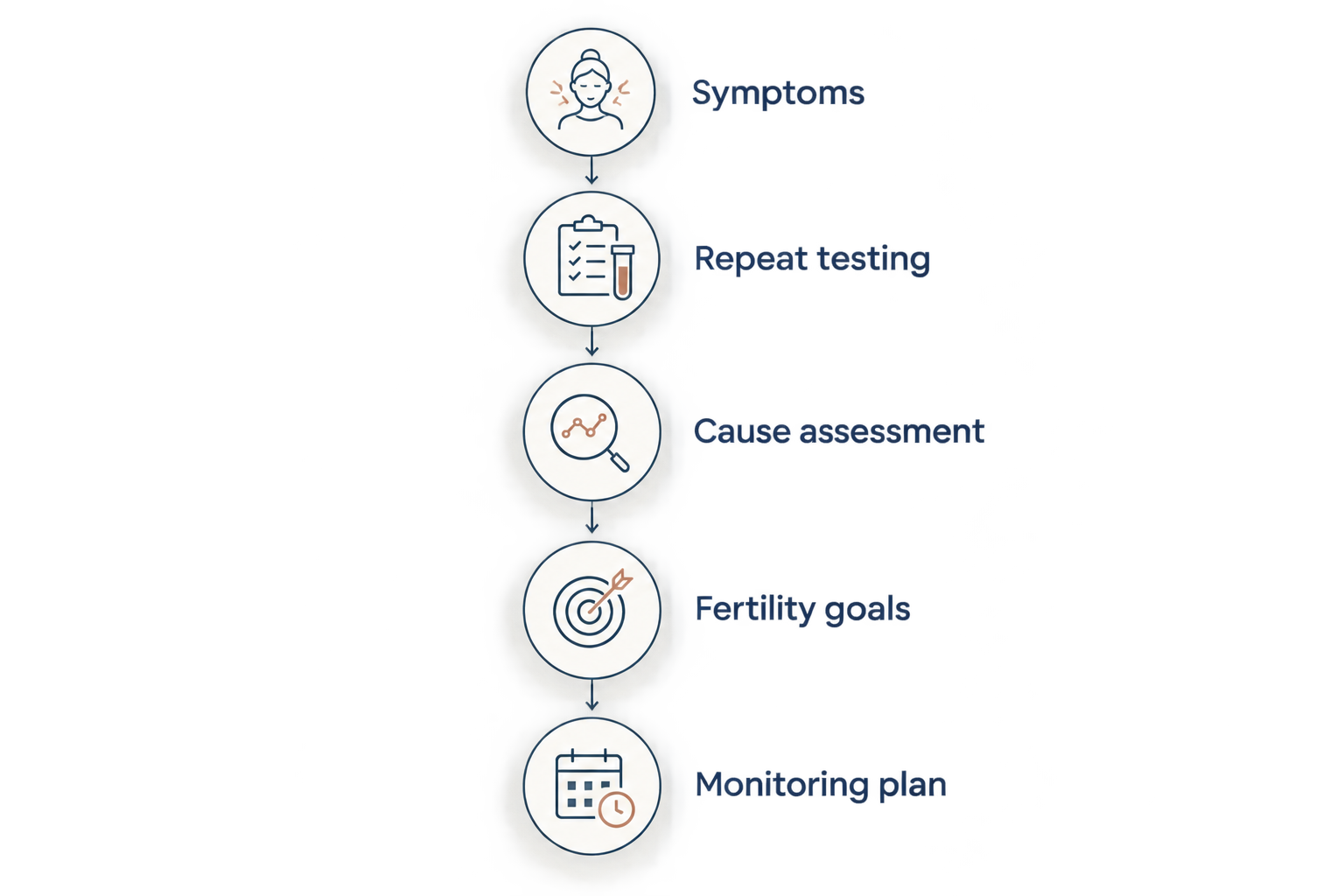
A treatment decision follows an evaluation; it does not replace one.
Supplements are not a substitute for diagnosis
When comparing clinics, keep prescription treatment separate from products marketed as testosterone boosters for men. A supplement label does not establish testosterone deficiency or show that the product treats its cause.
Tell your clinician about supplements as well as prescription medicines. That includes products promoted for energy, sexual performance, muscle building, or hormone support; the ingredient list belongs in the medical review.
Apply the same discipline to longevity services. Injectable NAD+ and glutathione are not proven longevity treatments, and evidence for broad anti-aging benefits in humans is limited. A practice's willingness to explain those limits is more meaningful than the length of its treatment menu.
Compare the full care plan, not just the prescription
Your 2026 comparison should cover what happens after treatment begins. Ask how symptoms, laboratory findings, side effects, and reproductive goals will influence decisions to continue, adjust, or stop treatment.
For example, testosterone can increase hematocrit, a measure of the proportion of blood made up of red blood cells. The American Urological Association guideline identifies an on-treatment hematocrit of 54% or higher as requiring intervention. That is a clinician-managed safety issue, not a number to manage by changing your own dose.
A short written checklist makes conversations easier:
- Who reviews an abnormal result, and how will you hear from them?
- What follow-up testing is planned, and why?
- What happens if your testosterone result improves but your symptoms do not?
- Which expenses fall outside the program charge?
- How will the practice coordinate with your existing clinician?
The guide to coordinating testosterone therapy with primary care addresses that last question. Shared records help each clinician understand the treatment plan and avoid decisions made without the full picture.
When staying with Men's Clinic Center is the right call
Stay with Men's Clinic Center if your clinician explains the diagnosis, discusses alternatives and fertility, monitors treatment, answers concerns, and makes the care arrangements clear. A different practice name is not a medical reason to switch.
Continuity has practical value when the clinician understands your history and responds appropriately to changing findings. Ask for clarification before transferring if your concern is an unanswered question rather than an unresolved safety issue.
FAQ
What's the best Men's Clinic Center alternative in St. Louis?
Men's Medical Institute is an option for independent, physician-led testosterone and men's-health care in St. Louis. Primary care is a better starting point when symptoms still need a broad medical evaluation.
Should I see primary care or a testosterone clinic first?
Start with primary care when the cause of your symptoms is unclear. Fatigue, sleep changes, and sexual symptoms can have explanations other than testosterone deficiency.
Does one low testosterone test mean I need treatment?
No. The American Urological Association guideline calls for separate early-morning measurements and relevant symptoms or signs, rather than diagnosis from one result alone.
Can testosterone treatment affect my fertility?
Yes. Testosterone treatment can suppress sperm production. Discuss current and future reproductive goals before starting treatment, and ask whether a male reproductive specialist is appropriate.
Are labs included in the testosterone program charge?
Labs are separate from the testosterone program charge at Men's Medical Institute. Ask for a clear explanation of included services and separate expenses before agreeing to treatment.
Should I stop testosterone before switching clinics?
Do not change prescribed testosterone without a clinician's instructions. Ask the receiving practice to review your records and explain the transition plan.
Are testosterone boosters the same as prescription testosterone?
No. Supplements marketed as testosterone boosters are not the same as prescribed testosterone treatment. Neither a supplement claim nor a symptom checklist establishes a diagnosis.
One last thing
A useful second opinion can end with no new prescription. Identifying another cause of symptoms—or confirming that your current care is appropriate—is a meaningful medical result.
If you live in St. Louis or Metro East Illinois and want to discuss physician-led care, call 314-394-1660. Bring your questions and existing results; the next step is a conversation about your situation, not a commitment to treatment.
This article provides general education, not individual medical advice. Treatment decisions require a clinician who knows your history.