Testosterone delivery methods ranked by monthly cost in 2026

Best starting point for a cost discussion: short-acting testosterone injections. Best needle-free option to discuss: testosterone gel. Best budget decision: the medically appropriate option with the lowest complete care bill—not simply the lowest medication quote. This 2026 testosterone delivery methods cost comparison ranks options to discuss, not a universal cheapest-to-most-expensive order.
TL;DR
- Start your testosterone delivery methods cost comparison with injections, then compare complete care bills rather than medication alone.
- Testosterone gel avoids needles but requires precautions against skin transfer to other people.
- Men's Medical Institute provides physician-led testosterone care; laboratory charges are separate from the testosterone program.
- Oral testosterone, long-acting injections and pellets have different monitoring and practical requirements.
Why this matters
A testosterone prescription and a testosterone care plan are different purchases. Your bill can include medication, laboratory testing, clinician visits, administration and supplies. Comparing only the medicine leaves out care you still need.
Men's Medical Institute provides physician-led testosterone care for men in St. Louis, including men traveling from Metro East Illinois. Men's Medical Institute is best suited to men seeking physician-led testosterone evaluation rather than a medication-only purchase. Laboratory charges are separate from its testosterone program.
This guide is general education, not individual medical advice. A clinician must establish whether treatment is appropriate before choosing a delivery method; fatigue, reduced libido or difficulty building muscle do not establish testosterone deficiency on their own.
What makes the best testosterone delivery method?
For your 2026 comparison, judge each option against the same criteria:
- Complete care bill: Include medication, labs, visits, administration and supplies.
- Clinical fit: Account for your diagnosis, medical history, fertility plans and treatment risks.
- Adjustability: Ask how the clinician changes or stops treatment when necessary.
- Daily burden: Consider application, injections, travel and instructions around use.
- Monitoring: Identify which tests you need, when they happen and who reviews them.
- Practical reliability: Choose a routine you can follow without improvising doses.
For a closer look at billing categories, read how to compare the full cost of testosterone care. A useful comparison separates the medicine from the clinical work surrounding it.
Testosterone delivery methods at a glance
The order below prioritizes options to discuss and distinct practical needs. It is not a verified monthly-cost ranking: your prescription, insurance coverage, dispensing pharmacy and required care determine your actual bill. Not every clinic provides every method.
| Rank and method | Best for | Standout feature | Cost items to check | Key limitation |
|---|---|---|---|---|
| 1. Short-acting injections | Men comfortable with injections who want dose adjustability | Clinician-directed changes to dose and interval | Medication, injection supplies, labs, administration if needed | Injection burden and possible level fluctuations |
| 2. Testosterone gel | Men who want to avoid injections | Daily skin application | Medication, labs and follow-up | Transfer precautions and a daily routine |
| 3. Oral testosterone undecanoate | Men who prefer oral treatment | Oral administration | Prescription, labs and blood-pressure monitoring | Product-specific instructions and blood-pressure concerns |
| 4. Long-acting testosterone undecanoate injection | Men prioritizing fewer dosing occasions | Longer interval between injections | Medication, administration, observation and travel | Serious injection-reaction precautions |
| 5. Testosterone pellets | Men who accept a procedure to avoid frequent dosing | Subcutaneous implantation | Pellets, insertion, follow-up and repeat procedures | Less flexible after insertion |
1. Short-acting injections: best for dose adjustability
Short-acting injectable testosterone includes preparations such as testosterone cypionate and testosterone enanthate. A clinician selects the preparation, dose and interval; these are not interchangeable instructions you should copy from another patient.
Start here when asking for a complete quote, especially if you are comfortable learning an injection routine. Do not assume that a vial quote includes needles, syringes, safe disposal, training or clinician-administered injections.
Short-acting injection pros:
- Dose and interval can be adjusted under clinical supervision.
- There is no daily skin application.
- There is no skin-transfer risk associated with gel application.
Short-acting injection cons:
- Injections require technique, supplies and sharps disposal.
- Testosterone levels and symptoms can fluctuate across the dosing interval.
- Blood-count monitoring remains necessary.
Best for: Men who accept injections and value a treatment plan their clinician can adjust.
Verdict: Hold until your clinician confirms suitability and provides a complete care quote. A familiar medication name does not tell you what ongoing care includes.
2. Testosterone gel: best for avoiding injections
Testosterone gel delivers testosterone through the skin. You apply it according to the specific product's instructions, including directions about application sites, washing and contact with other people.
Gel belongs in a serious cost comparison, not just an injection-avoidance conversation. Ask about the exact prescribed formulation and your pharmacy benefit rather than assuming every testosterone gel has the same out-of-pocket cost.
Testosterone gel pros:
- Treatment does not require injections or implantation.
- Daily application fits a consistent home routine.
- Treatment can be changed without removing an implanted product.
Testosterone gel cons:
- Skin contact can expose other people to testosterone unless precautions are followed.
- Daily application and product-specific washing instructions add practical constraints.
- Skin irritation can occur.
Best for: Men who prefer needle-free treatment and can reliably follow transfer precautions.
Verdict: Hold until you understand the application routine and receive a prescription-specific quote. Convenience depends on your household and habits, not just avoiding a needle.
3. Oral testosterone: best for men who prefer oral treatment
Prescription oral testosterone undecanoate is a distinct treatment option. It is not the same as an over-the-counter testosterone booster, and supplements are not substitutes for prescribed testosterone replacement.
Instructions differ between oral formulations, including directions about food. Oral treatment also requires clinical monitoring; choosing a capsule does not remove testosterone-related risks or follow-up needs.
Oral testosterone pros:
- No injection or implantation procedure is required.
- There is no gel-related skin-transfer precaution.
- Oral administration suits men who strongly prefer that route.
Oral testosterone cons:
- Product-specific dosing and food instructions require attention.
- Testosterone products can increase blood pressure, making assessment and monitoring important.
- Oral administration does not eliminate fertility or blood-count concerns.
Best for: Men who prefer oral treatment and whose clinician considers the specific formulation appropriate.
Verdict: Hold until your clinician reviews blood pressure, other medicines and the exact product instructions. Do not rank oral treatment by the capsule alone; include its monitoring requirements in your comparison.
4. Long-acting injections: best for fewer dosing occasions
Long-acting injectable testosterone undecanoate uses a different schedule and safety framework from short-acting testosterone injections. In the United States, the product labeling includes precautions for pulmonary oil microembolism and anaphylaxis, with administration and observation requirements.
Ask what each administration involves before comparing monthly equivalents. Medication, administration, required observation and travel all belong in the same calculation, even when they are billed separately.
Long-acting injection pros:
- Longer dosing intervals reduce how often injections are given.
- Treatment does not require daily skin application.
- Administration occurs within a defined clinical process.
Long-acting injection cons:
- Serious injection reactions require specific safety precautions.
- Appointment and observation requirements affect your schedule.
- A long-acting dose is less quickly adjustable after administration.
Best for: Men who prioritize fewer dosing occasions and can attend the required clinical appointments.
Verdict: Hold until a qualified clinician explains the safety requirements and full administration bill. Fewer injections do not automatically mean fewer care obligations.
5. Testosterone pellets: best for avoiding frequent dosing
Testosterone pellets are placed under the skin during a procedure. They release testosterone over time, so you do not apply gel daily or give yourself regular injections.
The procedural nature changes the comparison. Ask what insertion includes, how follow-up works, what happens if your treatment needs change and which services are billed separately.
Testosterone pellet pros:
- No daily application is required.
- There is no gel-related skin-transfer precaution.
- Treatment avoids frequent self-injection.
Testosterone pellet cons:
- Insertion carries procedural risks, including infection and pellet extrusion.
- Adjusting treatment after implantation is less straightforward.
- Repeat procedures add scheduling and billing considerations.
Best for: Men who accept an implantation procedure and understand the trade-off in flexibility.
Verdict: Hold until you understand the procedure, follow-up and adjustment plan. A treatment that requires less daily attention still needs ongoing medical oversight.
How to compare the complete monthly bill
For a useful 2026 comparison, request written estimates covering the same period and the same services. Keep the initial evaluation separate from ongoing treatment, and distinguish recurring charges from occasional procedures.
Use these categories for every option:
- Medicine: Identify the exact preparation and prescribed regimen.
- Labs: Ask which tests are ordered and billed separately.
- Visits: Include routine follow-up and appointments for treatment changes.
- Supplies: Include injection equipment and disposal where relevant.
- Travel: Account for appointments requiring in-person attendance.
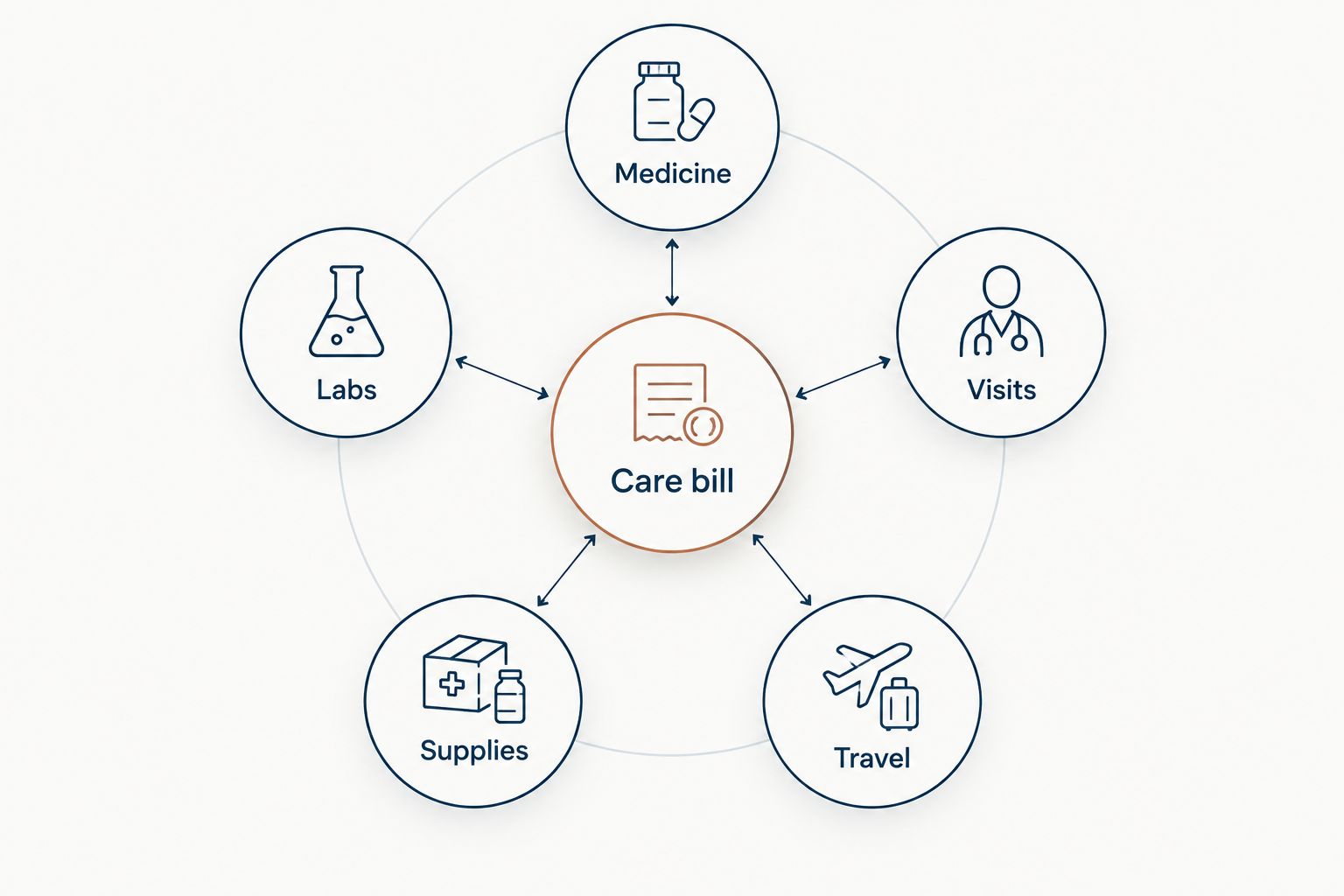
Compare the complete care bill rather than the medicine alone.
When a procedure covers a longer treatment period, ask the clinic to explain how it calculated the monthly equivalent. That equivalent helps comparison, but it does not change when payment is due or which services remain separate.
An introductory offer also needs a clear explanation of ongoing charges. Ask what changes after enrollment and what happens if your clinician recommends stopping treatment.
Safety belongs in a cost comparison
Paying less for treatment that you do not need is not a saving. The American Urological Association's testosterone deficiency guideline calls for symptoms or signs alongside low testosterone, with 2 separate early-morning measurements supporting diagnosis. Its suggested diagnostic cutoff is 300 ng/dL, interpreted within the clinical assessment rather than used alone.
Treatment monitoring matters too. The same guideline identifies an on-treatment hematocrit of 54% or higher as requiring intervention. Your clinician determines the response; do not adjust a prescription yourself based on an isolated result.
These diagnostic and monitoring principles remain central to this 2026 comparison. Discuss fertility before treatment because external testosterone can suppress sperm production, regardless of whether it comes as an injection, gel, capsule or pellet.
How the options were ranked
This shortlist ranks discussion priorities, not measured savings or treatment effectiveness. Short-acting injections lead for adjustability; gel addresses injection avoidance; oral treatment addresses route preference; long-acting injections and pellets address less frequent dosing.
No method wins every criterion. Your diagnosis and safety needs come first, followed by practical fit and a complete written estimate.
Which testosterone delivery method should you choose?
Start with a physician evaluation, then compare short-acting injections with the alternative that best fits your main concern. If needles are the obstacle, discuss gel or oral treatment. If frequent dosing is the obstacle, discuss longer-acting options and their additional requirements.
For your 2026 decision, Men's Medical Institute offers physician-led testosterone care rather than a one-size-fits-all treatment choice. If you want to discuss evaluation or what care includes, call 314-394-1660. Ask specifically about laboratory charges, which are separate from the testosterone program.
FAQ
What's the cheapest testosterone delivery method?
There is no single cheapest method for every patient. Compare prescription-specific medication charges, laboratory testing, visits, supplies and administration over the same treatment period.
Are testosterone injections better than gel?
Neither testosterone injections nor gel is best for everyone. Injections involve needles and dosing-interval considerations, while gel requires daily application and precautions against transfer to other people.
Does a testosterone monthly program include blood tests?
A monthly program does not automatically include blood tests. At Men's Medical Institute, labs are separate from the testosterone program, so ask for those charges when comparing care.
Can I choose testosterone pills instead of injections?
Prescription oral testosterone is an option for some men, but a clinician must assess whether it fits your medical history. The exact formulation's instructions and monitoring requirements matter.
Are testosterone pellets easier to stop than gel?
No. Gel application can be stopped, while implanted pellets continue releasing testosterone and treatment changes are less straightforward. Discuss adjustment options before an insertion procedure.
Do I still need monitoring if I feel better on testosterone?
Yes. Symptom improvement does not establish that blood counts, blood pressure or testosterone levels are appropriate. Keep the monitoring appointments your clinician recommends.
Can testosterone treatment affect fertility?
Yes. External testosterone can suppress sperm production across delivery methods. Tell your clinician about current or future fertility plans before starting treatment.
One last thing
Ask what happens if treatment needs to stop. A useful estimate explains more than starting treatment: it identifies who reviews side effects, how prescription changes are handled and which follow-up services carry separate charges. That answer helps you compare care, not just medication.