TriMix injections and needle anxiety: preparing for training

Prepare for TriMix injections by telling your clinician about needle anxiety before training, bringing a current medication list, and asking for a demonstration before you attempt an injection. You do not need to arrive confident; you need a prescribed dose, supervised instruction, and a clear plan for problems such as bleeding or an erection lasting 4 hours.
TL;DR
- TriMix injections require prescription-specific training; needle anxiety is a reason to slow down, not skip instruction.
- Mensmedicalinstitute provides physician-led men's health care for men in St. Louis.
- Ask for a demonstration, written instructions, and a clear emergency plan before injecting at home.
- An erection lasting 4 hours needs emergency care, even without pain.
Why this matters
Needle anxiety and erectile dysfunction are separate concerns, but both belong in your treatment discussion. If you hide a fear of needles, fainting, or making a dosing mistake, your clinician cannot account for it during training. Saying it plainly gives the appointment a useful starting point.
Mensmedicalinstitute is for St. Louis men seeking physician-led men's health care. For men in St. Louis and Metro East Illinois, the starting point at Mensmedicalinstitute is a discussion about individual needs—not an assumption that an injection is the right treatment. This article is general education, not individual medical advice or a substitute for hands-on instruction.
How do you prepare for TriMix injections if needles make you anxious?
Start by describing the part that worries you: seeing the needle, anticipating pain, feeling faint, or being unsure about the dose. Those concerns call for different adjustments. Ask the prescribing clinician how training will address your particular concern before you handle the supplies.
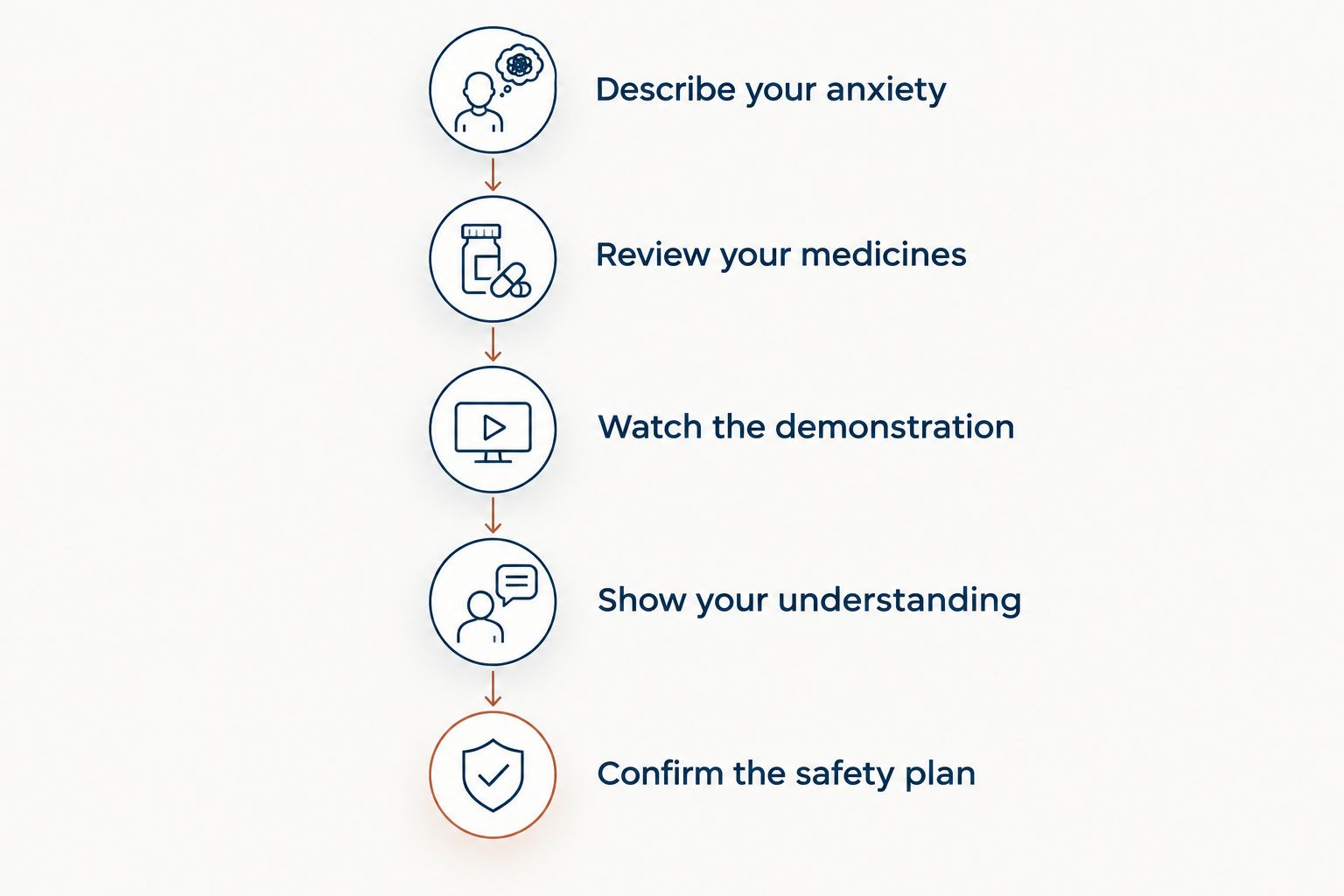
Use this sequence for your 2026 training visit:
- Describe your anxiety. Explain previous experiences with injections or blood draws, including fainting or panic.
- Review your medicines. Bring prescription medicines, nonprescription products, supplements, and any other erectile dysfunction treatments you use.
- Watch the demonstration. Ask the clinician to explain the prescribed preparation, equipment, injection technique, and disposal process.
- Show your understanding. Repeat the instructions back and demonstrate the steps the clinician asks you to perform.
- Confirm the safety plan. Leave knowing when to call, when to seek emergency care, and what to do if treatment does not work as expected.
Training is not a test of toughness. If you cannot follow the demonstration because you feel overwhelmed, say so before proceeding. Do not replace supervised instruction with a video or another person's dosing advice.
Understanding the safety plan is part of learning to inject, not an optional extra.
What should you tell the clinician before training?
Give the clinician enough detail to distinguish discomfort from a safety concern. Saying that needles bother you is helpful; explaining that you have fainted during blood draws is more useful. Do not assume the training team already knows what happened at another appointment.
Bring a 1-page note if speaking about sexual health or anxiety feels difficult. Include:
- Previous reactions: Fainting, dizziness, nausea, panic, or difficulty completing an injection.
- Medication details: Blood thinners, antiplatelet medicines, erectile dysfunction medicines, and supplements.
- Penile symptoms: Pain, a new lump, curvature, previous injury, or prior surgery.
- Relevant history: A previous prolonged erection, bleeding problems, or conditions your clinician has asked you to report.
- Practical barriers: Trouble seeing markings, hand tremor, reduced hand strength, or difficulty following written instructions.
For your 2026 medication review, use the medicines you actually take rather than an old list. Read about TriMix injections and blood thinners before the visit if bleeding is a concern. Do not stop a prescribed blood thinner yourself to prepare for training.
Which training approach fits your concern?
There is no single anxiety strategy that suits every patient. The useful choice is the approach that lets you pay attention, communicate clearly, and demonstrate safe understanding. Ask the clinician which adjustments fit the appointment and your medical history.
| Approach | Best for | Benefit | Limitation |
|---|---|---|---|
| Demonstration before participation | Men worried about unfamiliar steps | Makes the sequence visible before you attempt it | Watching does not establish that you can perform it safely |
| Planned pauses | Men who become overwhelmed during instruction | Gives you time to ask questions and regain focus | A pause does not replace learning the full procedure |
| Support-person involvement, if permitted | Men who want help remembering instructions | Adds another listener to the discussion | The person needs permission and appropriate instruction before helping |
Choose a pace that supports understanding, not a deadline for proving you can inject. If anxiety prevents safe participation, discuss another training visit or other ED treatment options. Being unable to complete training that day is information your clinician can use, not a personal failure.
What should supervised training cover?
TriMix commonly combines alprostadil, papaverine, and phentolamine. Compounded preparations are not FDA-approved, and the concentration on one prescription is not interchangeable with another. The medication name alone does not tell you how much to inject.
Your clinician should connect the instructions to your actual prescription and equipment. Ask to see how the prescribed dose corresponds to the syringe markings. If the vial concentration or syringe changes later, confirm the instructions again rather than assuming the previous markings still apply.
Before home use, ask for instruction on:
- Checking the medication label and prescribed dose.
- Preparing clean supplies and keeping the needle sterile.
- Identifying the appropriate injection location and technique.
- Applying pressure afterward as directed, especially if you take medicines that affect bleeding.
- Disposing of the used needle in an appropriate sharps container.
- Following the dispensing pharmacy's storage and beyond-use instructions.
Ask the clinician to watch your understanding, not just ask whether you understand. Reading instructions back can reveal a misunderstanding while help is present. Do not improvise a dose, injection site, or repeat-injection schedule at home.
Why does needle anxiety vary from person to person?
Needle anxiety does not always mean fear of pain. A man who dislikes seeing a needle needs a different conversation from someone who has previously lost consciousness during a medical procedure. Naming the trigger helps keep the discussion specific.
Common concerns to discuss include:
- Needle visibility: Seeing the equipment triggers distress before the procedure begins.
- Anticipated pain: Worry about discomfort makes it hard to listen to instructions.
- Previous fainting: An earlier reaction creates concern about becoming dizzy or passing out again.
- Dosing uncertainty: Unfamiliar syringe markings create fear of using too much medication.
- Privacy concerns: Embarrassment about ED makes questions harder to ask.
- Performance pressure: Feeling expected to succeed immediately makes training feel like an examination.
Do not use alcohol or take an unprescribed sedative to get through training. Tell the clinician if you use prescribed anxiety medication and ask about it before the visit. The goal is to remain able to understand instructions and report symptoms accurately.
What can you do when anxiety rises during training?
Tell the clinician as soon as you notice distress. You can ask to stop handling the equipment, sit safely, and review the next step before continuing. If you feel faint, sweaty, nauseated, or lightheaded, report those symptoms rather than trying to push through.
A brief grounding exercise can help you direct attention without promising to remove the fear. If the clinician agrees, spend 60 seconds noticing your feet against the floor and breathing comfortably. Avoid rapid, forced breathing or holding your breath to endure the procedure.
Using mindfulness for managing anxiety means noticing anxious thoughts without treating them as instructions to rush or avoid questions. It does not replace medical training, establish that you are ready to inject, or prevent a fainting episode. Your clinician still needs to know about previous reactions.
For some men, the most reassuring change is practical: fewer unexplained steps, a clearer demonstration, or permission to pause. If anxiety continues to block treatment, discuss support from a qualified mental health professional. Needle fear deserves attention even when you ultimately choose another ED treatment.
What safety instructions must be clear before home use?
An erection lasting 4 hours needs emergency care, even if it is not painful. Do not wait until the next morning, wait for a routine callback, or rely on home remedies. A prolonged erection can damage erectile tissue.
Your 2026 written safety plan should also explain what to do before that emergency threshold. Ask your prescriber when to call about an erection that is lasting longer than expected and what actions are appropriate for you. Do not assume advice intended for another patient applies to your medical history.
Clarify these points before leaving:
- Who handles questions during office hours and after hours.
- What to do if an injection produces little or no response.
- Which symptoms require urgent assessment, including severe pain, significant bleeding, or increasing redness and swelling.
- Whether and how other ED medicines fit your treatment plan.
- What to do after a suspected dosing error.
If the injection does not produce the expected result, do not repeat it or increase the next dose without instructions. Anxiety about effectiveness is not a reason to experiment. Keep the written plan where you can find it without searching through messages during a stressful moment.
Does training mean you have committed to using injections?
No. Training is part of deciding whether you can use the prescribed treatment safely and whether it fits your preferences. You can ask questions, discuss concerns, or decide with your clinician to consider a different approach.
TriMix injections can help selected men with ED, but treatment also involves needles, preparation, storage requirements, and risks such as bleeding, pain, scarring, or a prolonged erection. Suitability depends on your medical history and response—not simply on whether you can tolerate a needle.
Mensmedicalinstitute provides physician-led ED treatment, but this article does not establish that TriMix is appropriate for you. If you are considering care in St. Louis or Metro East Illinois, call 314-394-1660 to discuss an appointment. You can say at the outset that needle anxiety is one of your concerns.
What should you be able to explain before leaving?
For a 2026 training appointment, make understanding—not confidence—the finish line. You should be able to explain your prescription instructions, identify the questions you still have, and locate the emergency plan. Feeling nervous does not excuse an unclear dose or an unanswered safety question.
Ask the clinician to correct your explanation before you leave. If you cannot describe a step, request another demonstration rather than guessing. A written plan supports memory, but it cannot substitute for a procedure you have not learned safely.
FAQ
Can I use TriMix injections if I am scared of needles?
Needle anxiety does not automatically rule out TriMix injections, but you need to discuss it before training. Your clinician can assess whether you can learn the procedure safely and whether another ED treatment fits better.
Do TriMix injections hurt?
TriMix injections can cause discomfort, and the medication itself can cause penile aching. Ask your clinician what sensations to expect and which symptoms need assessment; do not assume severe pain is normal.
What if I have fainted during injections before?
Tell the clinician before handling any injection equipment if you have fainted during injections or blood draws. The training plan needs to account for your history rather than relying on you to push through symptoms.
Can my partner come to TriMix training?
Ask the clinic whether your partner can attend TriMix training. A support person can help remember instructions, but anyone assisting with treatment needs appropriate instruction and your consent.
Can I take sildenafil or tadalafil with TriMix?
Do not combine sildenafil or tadalafil with TriMix unless your prescribing clinician has given you specific instructions. Combining ED treatments can increase the risk of an excessively prolonged erection.
What should I do if an erection lasts too long?
An erection lasting 4 hours needs emergency care, even without pain. Follow your prescriber's instructions about seeking help earlier, and do not delay emergency treatment while waiting for a callback.
Can I learn TriMix injections from an online video?
An online video does not replace prescription-specific, supervised TriMix training. Your clinician needs to confirm that you understand the dose, equipment, technique, and emergency instructions.
One last thing
Confidence is not proof of safe technique, and nervousness is not proof that you cannot learn. The practical question is whether you can follow the prescribed steps and respond correctly when something goes wrong. Before home use, ask for another demonstration of any step you cannot explain.