GLP-1 weight-loss medications ranked by results in 2026

Best for average weight loss: tirzepatide. Best for weight management with an established cardiovascular indication: semaglutide. This 2026 guide compares semaglutide vs tirzepatide results, explains the limits of the evidence, and shows what to discuss before choosing treatment.
TL;DR
- Semaglutide vs tirzepatide results favor tirzepatide for average weight loss in the direct SURMOUNT-5 trial.
- Tirzepatide produced 20.2% average weight loss versus semaglutide’s 13.7% over 72 weeks in adults without diabetes.
- Semaglutide has demonstrated cardiovascular benefits in adults with established cardiovascular disease and overweight or obesity.
- Men’s Medical Institute offers physician-led weight management for men in St. Louis; medication selection requires individual assessment.
Why this matters
A higher average weight-loss percentage does not automatically make a medication right for you. Your medical history, treatment goals, side effects, and ability to maintain nutrition all affect the decision.
For men in St. Louis and Metro East Illinois, Men’s Medical Institute provides physician-led weight management. That is a care setting, not a reason to assume either medication is appropriate before an evaluation.
Tirzepatide leads semaglutide for average weight loss in the direct comparison, but the safest useful treatment is the one matched to your health. Losing weight while becoming dehydrated, undernourished, or unable to exercise is not the goal.
This is general education, not individual medical advice. Do not start, stop, switch, or increase a prescription based on a ranking.
What makes the best GLP-1 weight-loss medication?
This 2026 ranking prioritizes clinical outcomes rather than advertising claims. Tirzepatide acts on both GIP and GLP-1 receptors; semaglutide acts on GLP-1 receptors, so calling both simply GLP-1 medications leaves out a meaningful distinction.
- Direct weight-loss evidence: A trial comparing the medications in the same population answers the ranking question better than unrelated studies.
- Health benefits beyond weight: Cardiovascular disease, diabetes, and other conditions change which outcomes matter most.
- Tolerability: Nausea, vomiting, diarrhea, and constipation can interfere with treatment and daily life.
- Safety fit: Medical history, other medicines, and contraindications come before the scale.
- Long-term practicality: Follow-up, adequate nutrition, and a sustainable treatment plan matter after the initial weight loss.
Neither medication receives a universal recommendation. A prescription should answer a medical need, not simply follow the largest percentage in a table.
Semaglutide vs tirzepatide results at a glance
The weight-loss figures below come from SURMOUNT-5, published in the New England Journal of Medicine. The trial compared maximum tolerated weekly doses in adults with obesity who did not have diabetes; the figures are not a comparison of every dose or formulation.
| Rank and medication | Best for | Standout evidence | Key limitation |
|---|---|---|---|
| 1. Tirzepatide | Greatest average weight loss in the direct trial | 20.2% average weight reduction over 72 weeks | Gastrointestinal effects and individual safety factors can limit treatment |
| 2. Semaglutide | Weight management when established cardiovascular disease also guides treatment | 13.7% average weight reduction in SURMOUNT-5; cardiovascular benefit demonstrated separately in SELECT | Lower average weight loss than tirzepatide in SURMOUNT-5 |
These are trial averages, not promised outcomes. The cardiovascular evidence comes from a different study and should not be read as a head-to-head cardiovascular comparison.
1. Tirzepatide: best for greatest average weight loss
Tirzepatide acts on GIP and GLP-1 receptors involved in appetite and metabolic regulation. It can help you eat less by reducing hunger and increasing fullness, alongside the nutrition and activity measures prescribed with treatment.
In SURMOUNT-5, 751 adults with obesity and without diabetes were randomized to tirzepatide or semaglutide. At 72 weeks, average weight reduction was 20.2% with tirzepatide and 13.7% with semaglutide—a difference of 6.5 percentage points.
That makes tirzepatide the first-ranked option for the specific question of average weight reduction in this direct comparison. It does not establish that every person taking tirzepatide loses more weight than every person taking semaglutide.
Tirzepatide pros:
- Greater average weight reduction in a direct randomized comparison with semaglutide.
- Once-weekly injection schedules for approved injectable treatment.
- A dual-receptor approach that reduces appetite and supports weight management.
Tirzepatide cons:
- Nausea, diarrhea, vomiting, and constipation can make treatment difficult.
- Reduced appetite can interfere with adequate food and fluid intake.
- Contraindications and precautions exclude some patients regardless of the expected weight-loss benefit.
Best for: Adults who meet treatment criteria and prioritize greater average weight reduction after discussing their medical history and alternatives.
A useful appointment question is: What would make you pause my dose increases? The answer should include your symptoms, hydration, nutrition, and response—not just whether your weight has stopped falling.
Verdict: Hold until physician assessment; tirzepatide ranks first for average weight loss, not for every patient.
2. Semaglutide: best when cardiovascular history guides care
Semaglutide acts on GLP-1 receptors to help regulate appetite and food intake. Its approved formulations have different indications and dosing schedules, so the ingredient name alone does not tell you which prescription is being discussed.
For this 2026 comparison, semaglutide ranks second on average weight reduction in SURMOUNT-5. That position does not erase its separate cardiovascular evidence.
The SELECT trial, published in the New England Journal of Medicine, studied adults with established cardiovascular disease and overweight or obesity who did not have diabetes. Semaglutide reduced the relative risk of the combined outcome of cardiovascular death, nonfatal heart attack, or nonfatal stroke by 20% compared with placebo.
That is a relative reduction in cardiovascular events—not a weight-loss percentage and not proof that semaglutide outperforms tirzepatide for cardiovascular protection.
Semaglutide pros:
- Meaningful average weight reduction demonstrated in randomized trials.
- Cardiovascular outcome evidence in a defined population with established disease.
- Once-weekly dosing for the injectable formulation used in the comparison.
Semaglutide cons:
- Lower average weight reduction than tirzepatide in SURMOUNT-5.
- Gastrointestinal side effects can require changes to the treatment plan.
- The cardiovascular findings do not apply automatically to every person seeking weight loss.
Best for: Adults who meet treatment criteria and whose established cardiovascular disease makes the demonstrated cardiovascular benefit especially relevant.
Ask your physician to name the intended formulation and explain why it fits your history. A successful existing treatment should not be dismissed simply because another medication tops a weight-loss ranking.
Verdict: Hold until physician assessment; semaglutide remains a strong option when the full health picture supports it.
How this ranking was determined
The ranking gives priority to direct comparative weight-loss evidence, then separates that outcome from cardiovascular benefit and practical treatment considerations. It does not combine unrelated trial percentages into a single score.
SURMOUNT-5 used maximum tolerated tirzepatide doses of 10 or 15 mg and semaglutide doses of 1.7 or 2.4 mg weekly. Those are study details, not instructions for starting treatment or changing your prescription.
The 2026 takeaway is narrow but useful: tirzepatide produced greater average weight reduction under those trial conditions. Medication selection still requires a separate safety and suitability decision.
How to read the percentages without misreading your progress
A percentage describes change from starting body weight. It does not tell you how much muscle you retained, whether your blood pressure improved, or how treatment affected daily life.
The 72-week result is also not an early-treatment deadline. Both medications require dose escalation, and comparing your first few weeks with a trial’s final average creates the wrong benchmark.
Use these measures together when discussing progress:
- Weight trend: Look at the pattern rather than reacting to an isolated reading.
- Daily function: Report changes in strength, energy, and ability to exercise.
- Nutrition: Explain what you actually eat when appetite is low.
- Tolerability: Describe vomiting, bowel symptoms, dizziness, and difficulty drinking.
Resistance exercise and adequate nutrition belong in the conversation because weight loss can include lean tissue as well as fat. The guide to preserving strength during tirzepatide treatment addresses that distinction.
A smaller weight change with maintained function deserves a different discussion from rapid loss accompanied by weakness. Neither situation can be judged from the scale alone.
Safety factors that can change the ranking
For your 2026 treatment decision, contraindications outrank average results. Both medications carry warnings about thyroid C-cell tumors and are contraindicated in people with a personal or family history of medullary thyroid carcinoma or multiple endocrine neoplasia syndrome type 2.
Tell your prescriber about pancreatitis, gallbladder problems, severe stomach-emptying problems, kidney disease, and every prescription or nonprescription product you use. Medicines such as insulin and sulfonylureas require particular attention because combining treatments can increase hypoglycemia risk.
Medication suitability also changes with reproductive circumstances. Decisions about GLP-1 medications after pregnancy require assessment of breastfeeding and future pregnancy plans rather than simply extending an adult weight-loss ranking to postpartum care.
For men, the practical lesson is the same: another person’s prescription is not a template for your treatment. Shared household goals do not mean shared medication instructions.
Seek prompt medical assessment for persistent severe abdominal pain, repeated vomiting, or inability to keep fluids down. Severe symptoms are not evidence that treatment is working better.
Tell the anesthesia team about these medicines before surgery or sedation. Do not decide on your own whether to hold a dose; the plan depends on your symptoms, treatment phase, procedure, and clinical guidance.
Check the prescription, not just the ingredient name
The trial results discussed here concern specific studied formulations and doses. They do not establish that every product labeled semaglutide or tirzepatide has equivalent quality, delivery, or clinical results.
Compounded semaglutide and tirzepatide are not FDA-approved. FDA does not review compounded products for safety, effectiveness, or quality before they are marketed.
That distinction belongs in the prescribing conversation before treatment starts. Ask which exact product is being prescribed, whether it is FDA-approved, which pharmacy dispenses it, and how dosing instructions will be explained.
If a prescription uses a compounded product, ask why it is appropriate for your circumstances. Do not assume a familiar ingredient name resolves questions about formulation, concentration, or oversight.
Build the follow-up plan before the first dose
A useful treatment plan connects eligibility, medication choice, and monitoring. You should know whom to contact when symptoms appear and what happens before any dose increase.
Bring your medication list and relevant medical history to the appointment. Include previous weight-management treatment, what helped, what caused problems, and any upcoming procedures.
- Medical history: Identify contraindications, precautions, and conditions affecting treatment choice.
- Treatment goals: Define weight-related and functional outcomes that matter to you.
- Medication choice: Discuss the intended formulation and why it fits those goals.
- Follow-up plan: Clarify symptom reporting, nutrition review, and dose decisions.
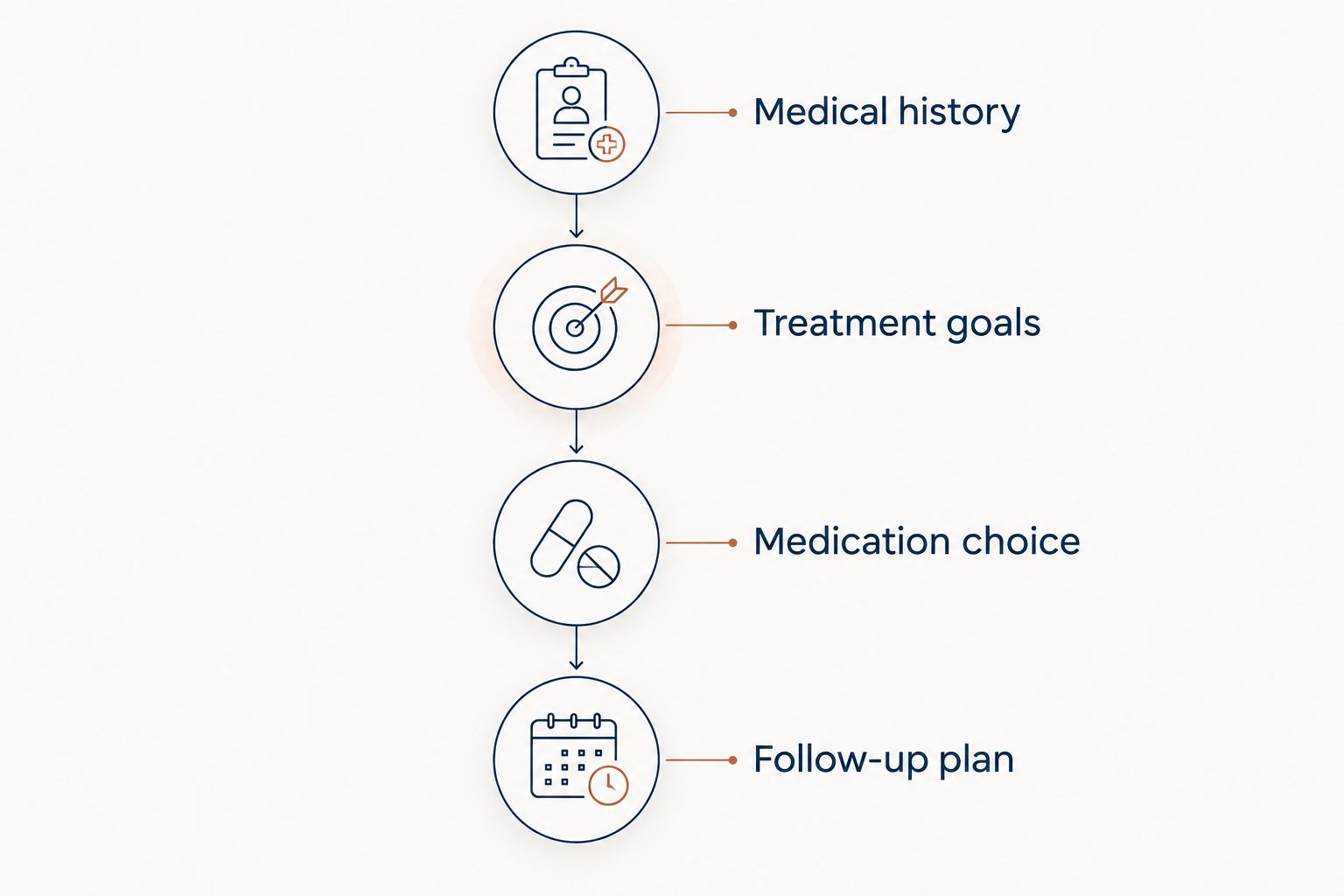
Medication choice belongs between a medical assessment and a clear follow-up plan.
Men’s Medical Institute’s physician-led weight-management care is relevant for men seeking an individualized discussion in St. Louis. Ask for a written explanation of treatment charges and any separate expenses before agreeing to care.
If you want to discuss whether an evaluation fits your needs, call 314-394-1660. You do not need to arrive having already chosen a medication.
Which medication should you choose?
For an undecided reader in 2026, tirzepatide is the first option to discuss when greater average weight loss is the main objective. Semaglutide deserves particular consideration when established cardiovascular disease makes its demonstrated cardiovascular benefit relevant.
Neither choice should bypass screening or replace a treatment you tolerate well without a clinical reason. If you already take one medication, review your progress and side effects before asking to switch.
Men’s Medical Institute provides physician-led weight management; this ranking does not establish which medication the practice will recommend for you. The next move is an assessment, not a self-directed prescription change.
FAQ
Which gives better weight-loss results, semaglutide or tirzepatide?
Tirzepatide produced greater average weight loss in SURMOUNT-5: 20.2% versus 13.7% with semaglutide over 72 weeks. The trial studied adults with obesity without diabetes, and individual outcomes vary.
Is tirzepatide a GLP-1 medication?
Tirzepatide acts on both GIP and GLP-1 receptors. Semaglutide acts on GLP-1 receptors, so the medications are related but not identical.
Is semaglutide better if I have heart disease?
Semaglutide has demonstrated cardiovascular benefit in adults with established cardiovascular disease and overweight or obesity without diabetes. That evidence supports an individualized discussion; it does not establish head-to-head cardiovascular superiority over tirzepatide.
Should I switch from semaglutide to tirzepatide?
Do not switch without your prescriber’s assessment. Your response, side effects, medical history, and treatment goals matter more than a ranking alone.
Are compounded semaglutide and tirzepatide FDA-approved?
No. Compounded semaglutide and tirzepatide products are not FDA-approved, and FDA does not review them for safety, effectiveness, or quality before marketing.
Can I take semaglutide and tirzepatide together?
Do not combine semaglutide and tirzepatide. Their prescribing information does not recommend combining them with other GLP-1 receptor agonists; ask your prescriber for a supervised plan if changing treatment.
What symptoms need medical attention during treatment?
Persistent severe abdominal pain, repeated vomiting, or inability to keep fluids down require prompt medical assessment. Do not increase your dose while waiting for those symptoms to resolve.
One last thing
Write down what a better result means before treatment begins. Include a daily activity you want to improve, not just a target weight.
That gives your physician something practical to assess alongside the scale. The most useful result is not simply a smaller number; it is weight management that remains medically appropriate and supports your health.