Tirzepatide for weight loss: reviewing your other medicines

Before starting tirzepatide weight loss treatment in 2026, have your prescriber review every prescription, over-the-counter medicine, vitamin, and supplement you take—especially insulin, sulfonylureas, other GLP-1 medicines, and oral medicines that need reliable absorption. Tirzepatide delays stomach emptying and can change medication absorption, while reduced food intake and weight loss can change your treatment needs; do not stop or adjust medicines yourself.
TL;DR
- Tirzepatide weight loss treatment needs a medication review before starting and whenever prescriptions or symptoms change.
- Insulin and sulfonylureas need particular attention because combining them with tirzepatide increases low blood sugar risk.
- Tirzepatide delays stomach emptying; ask about oral medicines that require close monitoring, including warfarin.
- Mensmedicalinstitute provides physician-led weight management for men in St. Louis; medication decisions require individual assessment.
Which medicines need review before tirzepatide weight loss treatment?
Start with the medicines below, but bring your entire list. A medicine missing from this table is not automatically safe to combine with tirzepatide. Include occasional prescriptions and medicines from clinicians outside your usual health system.
| Medicine or treatment | Why your prescriber needs to know | What to discuss |
|---|---|---|
| Insulin | Combining it with tirzepatide increases low blood sugar risk | Glucose checks and whether the insulin dose needs adjustment |
| Sulfonylureas, including glipizide and glimepiride | These medicines also increase low blood sugar risk when combined with tirzepatide | A monitoring plan and prescriber-directed dose decisions |
| Another tirzepatide product or a GLP-1 receptor agonist | Zepbound labeling does not recommend these combinations | Which treatment will continue and how any switch will work |
| Oral medicines requiring close monitoring, including warfarin | Delayed stomach emptying can affect absorption | Whether additional monitoring is needed when treatment changes |
| Blood pressure medicines and diuretics | Vomiting, diarrhea, reduced intake, and weight change can affect blood pressure or hydration | What symptoms or readings should trigger a call |
| Other weight management medicines and supplements | Combining treatments requires an individual safety review | Exact ingredients, doses, and the reason for each treatment |
For local care, Mensmedicalinstitute provides physician-led weight management for men in St. Louis. The medication list helps your clinician judge whether treatment fits your health history rather than treating weight as an isolated number.
Why this matters
A medication review is not just a search for prohibited combinations. It also asks whether the rest of your care still fits when you eat less, lose weight, or develop digestive symptoms.
For example, insulin prescribed for your previous eating pattern can become a different safety concern when meals get smaller. A diuretic deserves renewed attention if vomiting or diarrhea leaves you dehydrated. These are reasons to contact your prescriber, not instructions to make your own changes.
The goal is a coordinated treatment plan, not the shortest medication list. Keep the clinician who treats your diabetes, blood pressure, or heart condition involved even when a separate practice manages weight treatment.
Insulin and sulfonylureas: make a low blood sugar plan
Tirzepatide used with insulin or a sulfonylurea increases the risk of hypoglycemia, including severe episodes. Your prescriber may need to reduce the dose of those medicines and explain how to monitor glucose during treatment changes.
Ask for instructions before your first injection. You should know when to check glucose, which readings require a call, and who will adjust your diabetes medicines. Do not assume that eating less means you should skip insulin; the right response depends on your insulin regimen and diabetes history.
Common low blood sugar symptoms include shakiness, sweating, hunger, dizziness, and confusion. Symptoms alone do not reliably tell you how low your glucose is, so use your meter or continuous glucose monitor according to your care plan.
For many adults with diabetes, the American Diabetes Association describes glucose below 70 mg/dL as low. If you are awake and able to swallow, its standard approach is 15 grams of fast-acting carbohydrate, followed by a glucose recheck after 15 minutes; repeat treatment if glucose remains low and follow your individual instructions.
Severe confusion, seizure, unconsciousness, or inability to swallow requires emergency help. Do not give food or drink to someone who cannot swallow safely; use prescribed glucagon if available and call emergency services.
Other GLP-1 medicines: arrange the switch, not an overlap
Zepbound is a tirzepatide product approved for weight management in eligible patients. Mounjaro also contains tirzepatide, but its approved indication differs; sharing an active ingredient does not make product instructions interchangeable.
FDA-approved Zepbound prescribing information says coadministration with another tirzepatide-containing product or any GLP-1 receptor agonist is not recommended. Tell your prescriber about semaglutide, liraglutide, or any injection whose name you do not remember. A photograph of the packaging is useful.
If you are switching treatments in 2026, get a written plan rather than combining leftover medicine with a new prescription. Ask which medicine stops, when the new one starts, and what to do if nausea or vomiting interrupts the transition.
Do not translate a previous injection dose into a tirzepatide dose yourself. Different medicines have different dosing schedules, and a familiar-looking pen or syringe does not establish equivalence.
Oral medicines: delayed stomach emptying needs context
Tirzepatide delays gastric emptying, meaning food and medicines can leave your stomach more slowly. That creates a reason to review oral medicines, but it does not mean every tablet stops working or needs a different dose.
FDA-approved prescribing information calls for particular attention to oral medicines whose effectiveness depends on threshold concentrations and medicines with a narrow therapeutic index, such as warfarin. With these treatments, a relatively small change in drug exposure can matter clinically.
If you take warfarin, tell the clinician managing your INR that you are starting or changing tirzepatide. Ask whether your monitoring schedule should change; do not adjust warfarin based on appetite or body weight alone.
Also discuss tablets that must be taken on an empty stomach or according to specific timing instructions. Do not move them to a different time, repeat a dose after vomiting, or crush them without checking with your pharmacist or prescriber.
The oral contraceptive warning applies to the person taking tirzepatide, not their partner. FDA labeling advises switching to a non-oral contraceptive or adding a barrier method for 4 weeks after starting tirzepatide and for 4 weeks after each dose increase.
Why medication needs vary during treatment
Your treatment plan should reflect what is happening in your body, not just whether a medicine appears on an interaction list. These factors explain why two people taking tirzepatide can need different follow-up:
- Diabetes treatment: Insulin and sulfonylureas change the low blood sugar risk and monitoring plan.
- Food intake: Smaller meals or missed meals matter when other medicines depend on eating patterns.
- Digestive symptoms: Vomiting and diarrhea can affect hydration and make oral dosing difficult.
- Kidney health: Dehydration can worsen kidney function and affect decisions about other medicines.
- Blood pressure and weight change: New dizziness or lower readings deserve review rather than an automatic refill of an unchanged plan.
- Monitoring requirements: Medicines such as warfarin need attention to their own tests, not just weight measurements.
None of these factors establishes that a medicine must stop. They establish what your prescriber needs to assess.
How should I prepare my medication list?
Bring a list that another clinician can act on. For a 2026 medication review, include current prescriptions rather than relying on an old visit summary that still contains discontinued treatments.
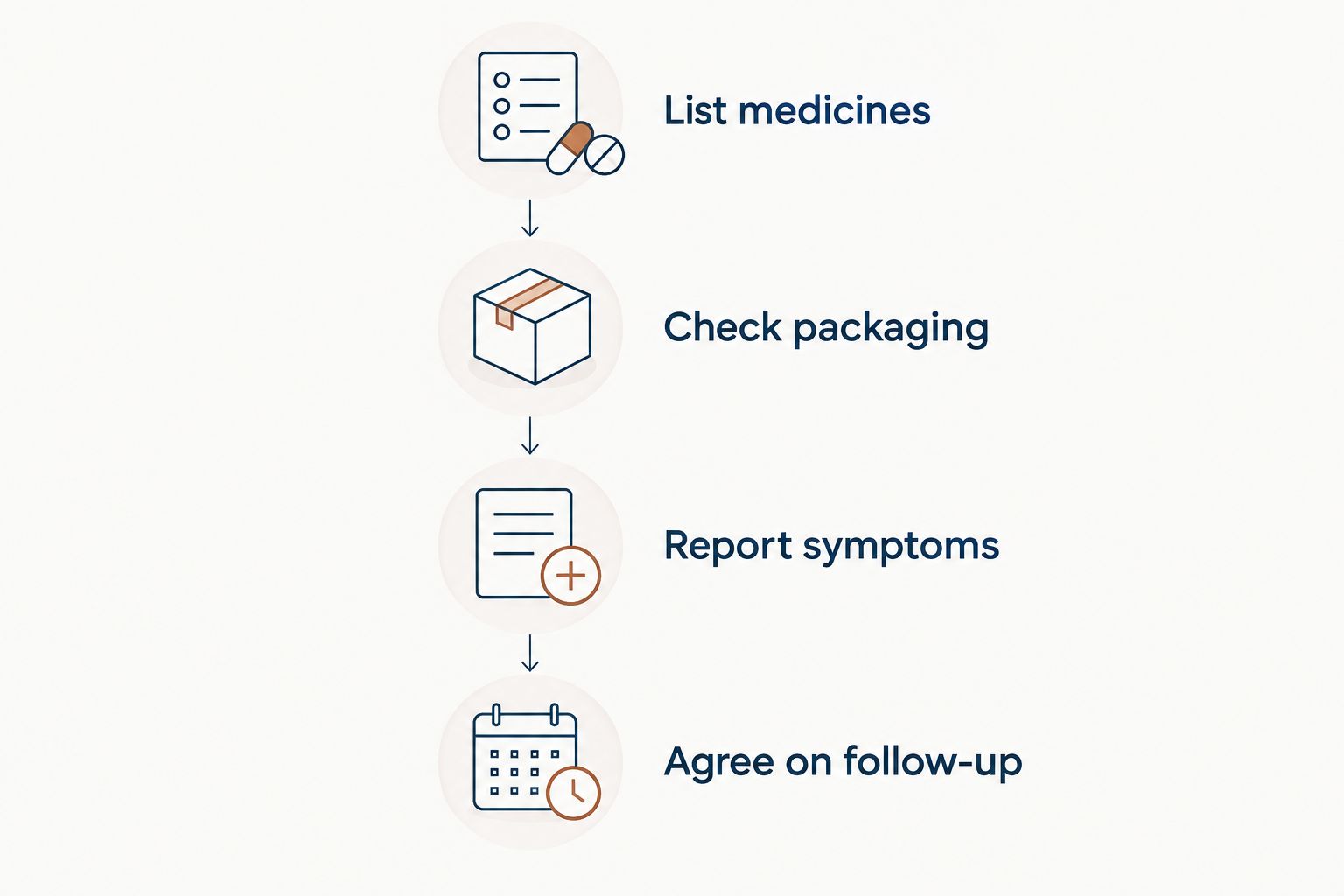
- List medicines. Record the name, strength, dose, timing, reason you take it, and prescribing clinician. Include nonprescription pain relievers, antacids, sleep aids, vitamins, and supplements.
- Check packaging. Bring the box, pen, bottle, or a clear photograph when a name or concentration is uncertain. Include compounded prescriptions rather than describing everything as a weight loss shot.
- Report symptoms. Note vomiting, diarrhea, constipation, dizziness, low glucose readings, and changes in eating or drinking. Explain when symptoms began relative to treatment changes.
- Agree on follow-up. Identify who changes each medicine, what to monitor, and whom to call if you cannot keep fluids or medicines down.
A useful list also states what you actually take. If you miss doses, split tablets, or use a prescription only occasionally, say so without embarrassment; an accurate account is more useful than a perfect-looking record.
Your medication review should end with clear monitoring and contact instructions.
Should I change blood pressure medicine if I feel dizzy?
Do not change blood pressure medicine on your own because you feel dizzy during tirzepatide treatment. Check your blood pressure if you have been instructed to monitor it, and contact the prescribing clinician with the readings and symptoms.
Dizziness can accompany low blood pressure, low glucose, dehydration, or another problem. Tell your clinician about vomiting, diarrhea, reduced drinking, and diuretic use so the assessment does not focus on blood pressure alone.
Fainting, chest pain, severe weakness, or confusion needs urgent assessment. Persistent vomiting or an inability to keep fluids down also requires prompt medical advice rather than waiting for a routine follow-up.
Do I need to tell my surgical or anesthesia team?
Tell the team arranging any procedure that you take tirzepatide, including procedures involving deep sedation. Delayed stomach emptying matters because retained stomach contents can increase aspiration risk during anesthesia or deep sedation.
For a procedure in 2026, follow instructions from your anesthesia and prescribing teams rather than applying a universal stop rule yourself. Decisions depend on the procedure, digestive symptoms, treatment stage, and other clinical factors.
Give the team your medicine name, dose, and last injection date. Mention recent dose increases and nausea, vomiting, or a feeling that food stays in your stomach unusually long.
What evidence should guide the review?
The medication precautions here come from FDA-approved Zepbound and Mounjaro prescribing information, including warnings about hypoglycemia, oral medication absorption, dehydration-related kidney injury, and aspiration during anesthesia or deep sedation. The low glucose threshold and treatment approach reflect the American Diabetes Association's Standards of Care in Diabetes—2026 for adults with diabetes.
These sources describe known risks and general precautions; they do not establish that every combination is appropriate for you. Compounded tirzepatide is not FDA-approved, and FDA does not review compounded products for safety, effectiveness, or quality before marketing.
Mensmedicalinstitute is for men in St. Louis seeking physician-led weight management. If you live in St. Louis or Metro East Illinois and want to discuss medication coordination, call 314-394-1660. Bring your medication list and ask how follow-up would work with your existing clinicians.
FAQ
Can I take tirzepatide with insulin?
Tirzepatide can be prescribed with insulin, but the combination increases low blood sugar risk. Your prescriber should decide whether insulin needs adjustment and give you a glucose monitoring plan.
Can I take tirzepatide and semaglutide together?
FDA-approved Zepbound prescribing information does not recommend combining tirzepatide with a GLP-1 receptor agonist such as semaglutide. Ask your prescriber for a transition plan instead of overlapping prescriptions.
Does tirzepatide stop my other pills from working?
Tirzepatide does not automatically stop other pills from working, but delayed stomach emptying can affect oral medication absorption. Medicines requiring close monitoring, including warfarin, deserve specific review.
What should I do if I vomit after taking my tablets?
Ask your pharmacist or prescriber before repeating a tablet dose after vomiting. The correct action depends on the medicine, its formulation, and the timing of vomiting.
Should I tell my weight management doctor about testosterone or ED medicines?
Yes. Include testosterone, ED medicines, injections, supplements, and occasional prescriptions in your medication list so your clinician can assess the whole treatment plan.
Can Mensmedicalinstitute help me discuss weight management with my other doctors?
Mensmedicalinstitute provides physician-led weight management for men in St. Louis. Call 314-394-1660 to ask how medication review and communication with your existing clinicians would be handled.
One last thing
Ask who owns each medication decision. Knowing that one clinician manages tirzepatide, another manages insulin, and another monitors warfarin is not enough unless you also know whom to contact when symptoms or readings change.
This article provides general education, not individual medical advice. Your prescribing clinician should make treatment decisions using your health history, examination, laboratory results, and current medicines.