Tirzepatide weight loss: when vomiting needs urgent attention

Vomiting during tirzepatide weight loss treatment needs urgent assessment when you cannot keep fluids down, pass very little urine, or develop severe or persistent abdominal pain. Call 911 for trouble breathing, swelling of your tongue or throat, collapse, or confusion. Do not assume repeated vomiting is an expected side effect: dehydration, kidney injury, pancreatitis, and gallbladder problems need medical attention.
TL;DR
- Tirzepatide weight loss treatment should not mean pushing through repeated vomiting or dehydration.
- Severe abdominal pain, blood in vomit, confusion, or allergic symptoms require emergency assessment.
- Contact your prescriber before your next injection if vomiting persists or prevents normal drinking.
- Mensmedicalinstitute provides physician-led weight management for men in St. Louis; emergency symptoms need emergency care.
When does vomiting during tirzepatide weight loss need urgent attention?
Your ability to drink, your urine output, and accompanying symptoms matter more than a fixed number of vomiting episodes. Do not wait for a particular episode count or for the next business day when warning signs are present.
| Level of care | Symptoms or situation | What to do |
|---|---|---|
| Emergency care | Severe or persistent abdominal pain; blood or coffee-ground material in vomit; collapse; confusion; breathing difficulty; tongue or throat swelling | Seek emergency assessment now. Call 911 for life-threatening symptoms or unsafe transport. |
| Same-day advice | Repeated vomiting; inability to keep fluids down; much less urine; dizziness on standing; symptoms after a dosing error | Contact your prescriber promptly. Use urgent care or an emergency department if symptoms are severe or timely advice is unavailable. |
| Home monitoring | An isolated episode that has stopped, fluids stay down, urination continues normally, and no warning signs are present | Take small sips, monitor symptoms, and contact your prescriber if vomiting returns or intake remains poor. |
For non-emergency follow-up, use the contact page to discuss ongoing care. An online message is not a substitute for urgent assessment.
Why this matters
Tirzepatide slows stomach emptying, and nausea and vomiting are recognized adverse effects. That does not make every episode harmless. Repeated fluid loss can affect kidney function, especially when you cannot replace what you lose.
For men considering treatment in 2026, a weight-management plan needs instructions for side effects as well as instructions for injections. The immediate goal during vomiting is safe hydration and assessment—not faster weight loss.
Mensmedicalinstitute offers physician-led weight management for men in St. Louis. Individual physician judgment matters because the same symptom can require different action depending on your examination, other medicines, and medical history.
Emergency care: symptoms you should not watch at home
Severe or persistent abdominal pain
Severe abdominal pain that does not go away, particularly pain that spreads to your back, needs urgent assessment. Pancreatitis is a warning in tirzepatide prescribing information, and it can occur with or without vomiting.
Stop tirzepatide and seek medical attention immediately if pancreatitis is suspected. Do not take another injection while waiting to find out whether persistent severe pain is simply a stomach upset.
Upper abdominal pain with fever, yellowing of the skin or eyes, or pale stools also needs prompt assessment for a possible gallbladder problem. You cannot reliably distinguish these conditions from a medication side effect at home.
Blood, collapse, or allergic symptoms
Blood in vomit or material resembling coffee grounds needs emergency assessment. Fainting, confusion, or profound weakness alongside ongoing vomiting also warrants emergency care rather than continued home treatment.
Call 911 for breathing difficulty, throat or tongue swelling, or collapse. Do not drive yourself when you are faint, confused, or too weak to travel safely.
A swollen abdomen with worsening symptoms
A swollen or increasingly painful abdomen, vomiting, and inability to pass stool or gas need urgent assessment. These symptoms can indicate a bowel problem rather than routine medication-related nausea.
Tell the treating clinician that you use tirzepatide and when you last injected it. Bring your medication list or a clear photograph of the prescription label if doing so does not delay care.
Same-day advice: repeated vomiting or signs of dehydration
Contact your prescriber the same day when vomiting keeps returning, you cannot retain liquids, or your urine output falls noticeably. Dry mouth, dark urine, and dizziness when standing can support concern about dehydration, but no single sign rules it in or out.
Do not wait until you stop urinating entirely. Persistent vomiting deserves earlier attention if you have kidney disease, take medicines that affect fluid balance, or have another condition that makes dehydration harder to manage.
A clinician can assess whether you need blood tests, fluids, a medication change, or evaluation for another illness. Home hydration does not replace that assessment when you cannot keep drinks down.
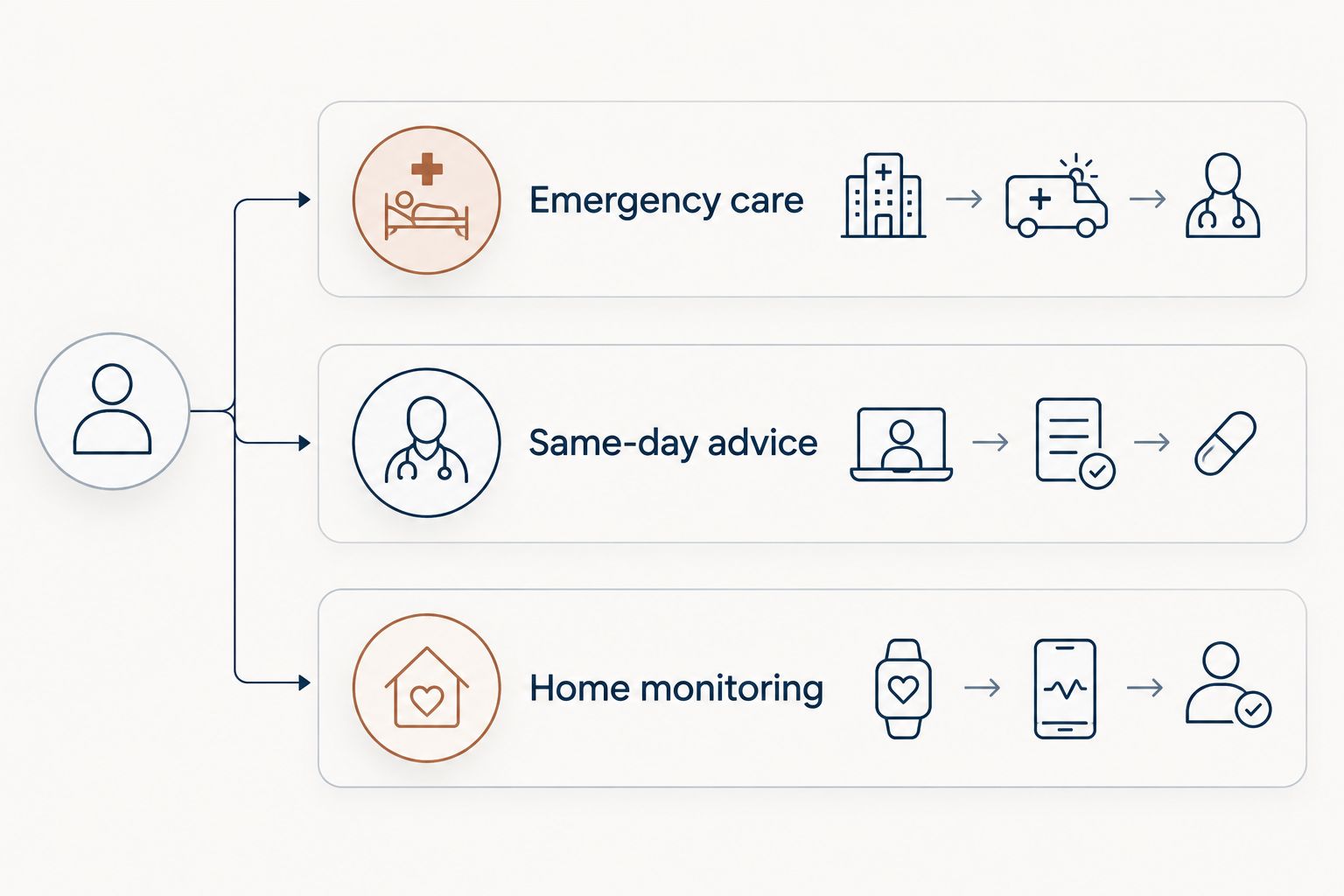
Choose the level of care by warning signs and hydration, not just the number of vomiting episodes.
What should you do while arranging medical advice?
If no emergency warning signs are present and you can swallow safely, take small, frequent sips rather than trying to finish a large drink. An oral rehydration solution can replace fluid and electrolytes lost through vomiting.
Do not force solid food while actively vomiting. Once liquids stay down, try small amounts of food you tolerate; large or fatty meals can be harder to manage when stomach emptying is slowed.
Use this sequence while arranging advice:
- Check warning signs. Look for severe pain, blood, confusion, breathing difficulty, or worsening weakness.
- Assess drinking. Notice whether small sips remain down and whether you are still urinating.
- Record symptoms. Note when vomiting began, your last injection, and any recent dose change.
- Contact care. Explain the symptoms directly rather than describing them only as nausea.
Avoid alcohol while you are vomiting or dehydrated. If you have a prescribed fluid restriction because of heart or kidney disease, ask for individualized hydration instructions rather than substantially increasing fluids yourself.
Why vomiting risk and urgency vary
The relevant factors are not just how strong your nausea feels. Your dose history, fluid losses, and other symptoms change the next step.
- Treatment stage: Nausea, vomiting, and diarrhea commonly occur during dose escalation in tirzepatide weight-management trials.
- Dose and tolerability: A dose increase should account for how you tolerate treatment, not only your weight trend.
- Fluid intake: Repeated vomiting becomes more concerning when you cannot replace lost fluid.
- Other medicines: Insulin and sulfonylureas increase hypoglycemia risk when used with tirzepatide, making reduced food intake especially important to report.
- Medical history: Kidney disease and significant stomach-emptying problems affect assessment and treatment decisions.
- Accompanying symptoms: Severe pain, fever, jaundice, bleeding, or abdominal swelling changes the urgency.
For this 2026 discussion, the FDA-approved Zepbound prescribing information provides useful context: vomiting was reported in 8% of participants receiving 5 mg, 11% receiving 10 mg, and 13% receiving 15 mg in pooled weight-reduction trials. These are trial-group results, not a prediction of your individual risk.
Those figures do not define a safe amount of vomiting. The same prescribing information warns about acute kidney injury due to volume depletion, severe gastrointestinal adverse reactions, pancreatitis, and acute gallbladder disease.
Should you take your next tirzepatide injection after vomiting?
Contact your prescriber before your next injection if vomiting persists, drinking remains difficult, or the cause has not been assessed. Do not increase the dose while unresolved symptoms are being evaluated.
Vomiting does not mean an injected dose has left your body. Do not repeat an injection to replace it, and do not make an extra injection part of your response to poor weight loss.
If you suspect a dosing error, tell the clinician the product name, prescribed dose, concentration, amount injected, and injection time. With a compounded preparation, reporting only syringe units does not establish how much tirzepatide you received; the concentration also matters.
In 2026, distinguish FDA-approved tirzepatide products from compounded preparations. Compounded drugs are not FDA-approved, and FDA does not review them for safety, effectiveness, or quality before marketing.
Does vomiting mean you need a different weight-loss approach?
Repeated vomiting is a reason to reassess treatment, not a reason to blame yourself or accept dehydration as the price of progress. A physician can review tolerability, dose escalation, other medicines, and whether another illness explains the symptoms.
Comparing ESG versus GLP-1 medications involves different treatment approaches: endoscopic sleeve gastroplasty changes the stomach through an endoscopic procedure, while GLP-1-based medicines act through medication. Neither comparison replaces urgent evaluation of current vomiting, and neither approach removes the need to discuss risks and follow-up.
Best for a treatment review: an individualized conversation after immediate safety concerns have been addressed. Changing treatment without resolving the cause of vomiting can leave the underlying problem unrecognized.
For your 2026 treatment review, bring a practical account of what happened. Explain whether symptoms disrupted drinking, meals, work, or taking essential medicines—not just whether the scale changed.
What should you tell your prescribing clinician?
Give your clinician details that affect decisions. A short written record is easier to use than trying to reconstruct everything during a call.
Include:
- Your medication name, dose, and the date and time of the last injection.
- Whether you recently started treatment or increased the dose.
- When vomiting began and whether it is continuing.
- What fluids you can retain and whether urination has decreased.
- Any abdominal pain, fever, diarrhea, constipation, swelling, or blood.
- Other medicines, especially diabetes medicines, and any dosing uncertainty.
Ask what to do about your next injection, whether testing is needed, and which symptoms should send you directly to emergency care. If you vomit after taking an oral medicine, ask before repeating that medicine too.
Mensmedicalinstitute is a fit for men in St. Louis seeking physician-led weight management. Men in St. Louis and Metro East Illinois can call 314-394-1660 to discuss non-emergency care; severe symptoms require urgent medical services instead.
Is vomiting proof that tirzepatide is working?
Vomiting is not proof that tirzepatide is working, and it is not a treatment goal. A lower scale reading after fluid loss does not establish meaningful fat loss or a healthy response.
Weight management should preserve your ability to drink, nourish yourself, and function. Persistent symptoms deserve a treatment review even when your weight is decreasing.
Can vomiting on tirzepatide cause kidney problems?
Vomiting can contribute to kidney injury when fluid loss causes dehydration. Reduced urine, dizziness, and inability to retain fluids warrant prompt medical advice; severe weakness, confusion, or collapse requires emergency care.
You do not need a prior kidney diagnosis for dehydration to matter. Tell the clinician about any kidney disease and all medicines you take.
Can you manage mild symptoms at home?
An isolated episode without warning signs can be monitored when fluids stay down and urination remains normal. Use small sips, resume food gradually, and seek advice if symptoms recur or prevent normal intake.
Home monitoring is a temporary response to mild, improving symptoms—not a reason to delay assessment of persistent vomiting.
FAQ
When should I go to the ER for vomiting on tirzepatide?
Seek emergency assessment for severe or persistent abdominal pain, blood or coffee-ground material in vomit, confusion, collapse, or a swollen painful abdomen with inability to pass stool or gas. Call 911 for breathing difficulty, tongue or throat swelling, or collapse.
Should I wait until tomorrow if I cannot keep water down?
Do not wait until tomorrow if vomiting prevents you from keeping fluids down. Contact your prescriber promptly, and seek urgent in-person care if symptoms are severe or timely advice is unavailable.
Should I inject another dose if I vomited after taking tirzepatide?
Do not inject another dose to replace one after vomiting. Tirzepatide is injected rather than swallowed, so vomiting does not mean the dose has been lost.
Is vomiting normal after a tirzepatide dose increase?
Vomiting is a recognized side effect and commonly occurs during dose escalation, but repeated vomiting should not be dismissed as normal. Contact your prescriber if symptoms persist, drinking becomes difficult, or warning signs appear.
Can I take nausea medicine and continue tirzepatide?
Ask your prescriber before using nausea medicine to push through persistent vomiting. Symptom relief does not rule out dehydration, pancreatitis, gallbladder disease, or another condition requiring assessment.
What if I use insulin and cannot eat because I am vomiting?
Contact your diabetes clinician promptly for sick-day instructions and check glucose according to your care plan. Tirzepatide used with insulin or a sulfonylurea increases hypoglycemia risk; do not independently stop essential insulin.
Is this article personal medical advice?
This article provides general education, not an individual diagnosis or treatment plan. Your prescribing clinician must assess your symptoms, medical history, and medicines to advise you personally.
One last thing
Before your next routine visit in 2026, save your prescriber's instructions for vomiting somewhere you can find them quickly. Include how to obtain after-hours advice and what to do before the next injection if you are unwell.
The most useful safety plan is written before symptoms begin. You should not have to decide whether severe pain or dehydration is acceptable while you are already feeling ill.